

In this second post of bonus material for the Office of Supernatural Directives thriller Demigod of the Deep we’ll look at what life was like serving aboard a submarine during World War II. All the pictures here were taken aboard the U.S.S. Drum, a WWII-era submarine preserved at Battleship Memorial Park in Mobile, Alabama.
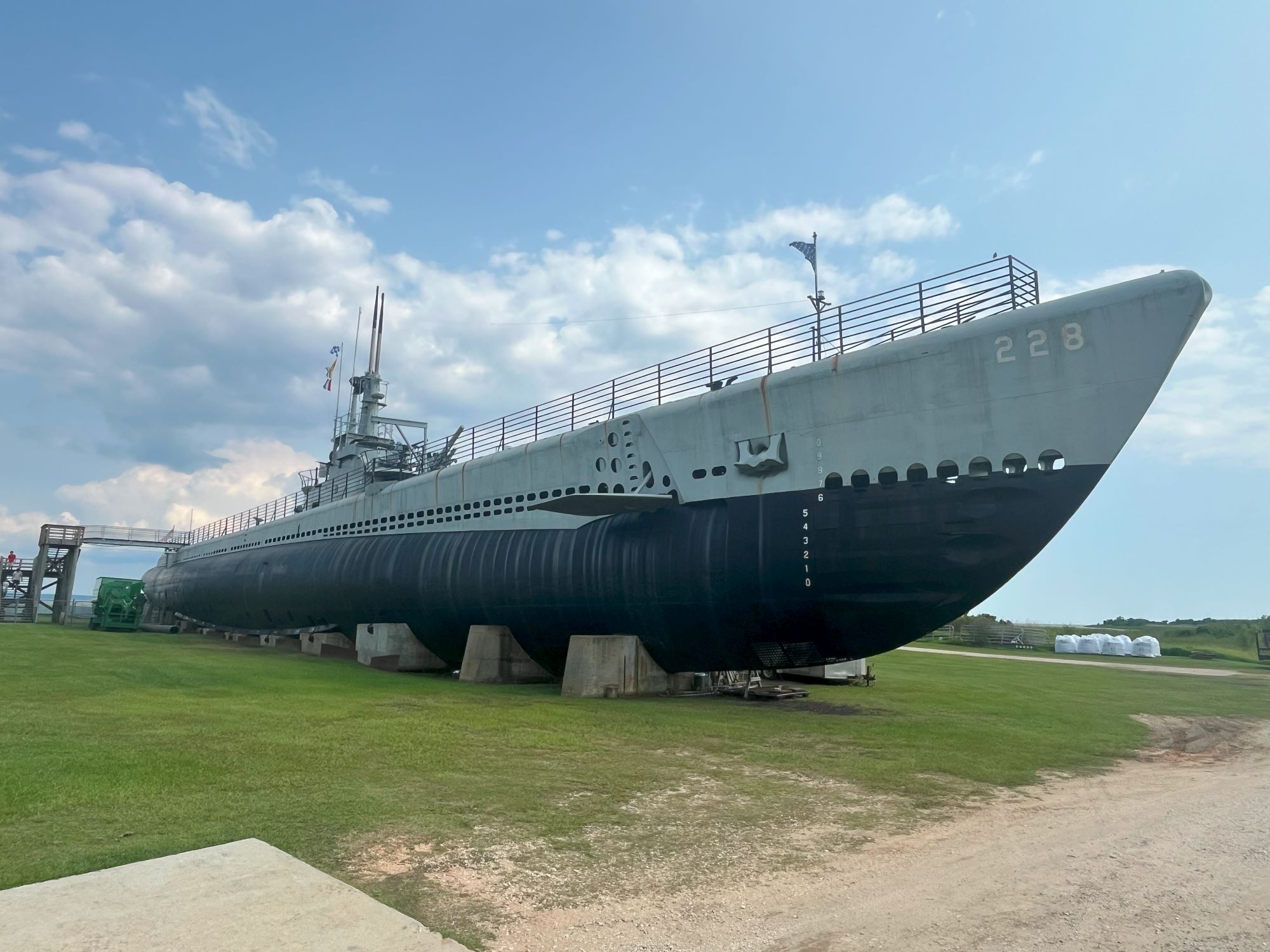
This submarine has a length of 311 feet, but a very narrow beam, or width, of only 27 feet. A lot of equipment, like engines, motors, ballast tanks, etc. fill much of the space inside. What is left for the crew to live and work in is about 3,000 square feet. That crew size was 72. That means things are tight inside.
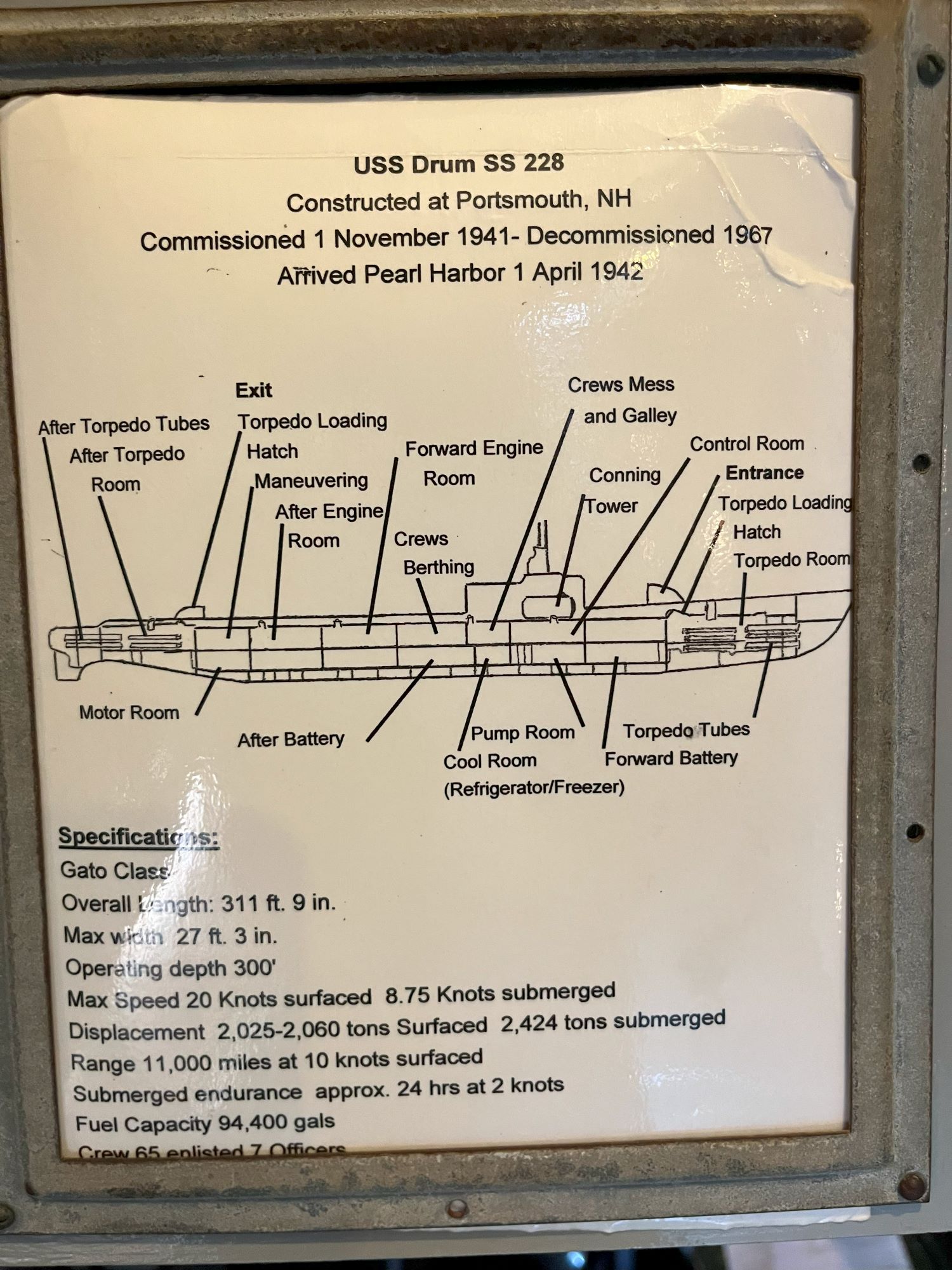
This diagram gives you an overview of the submarine’s layout. We’ll look first at the area between the forward torpedo room and the control room where the officers lived.
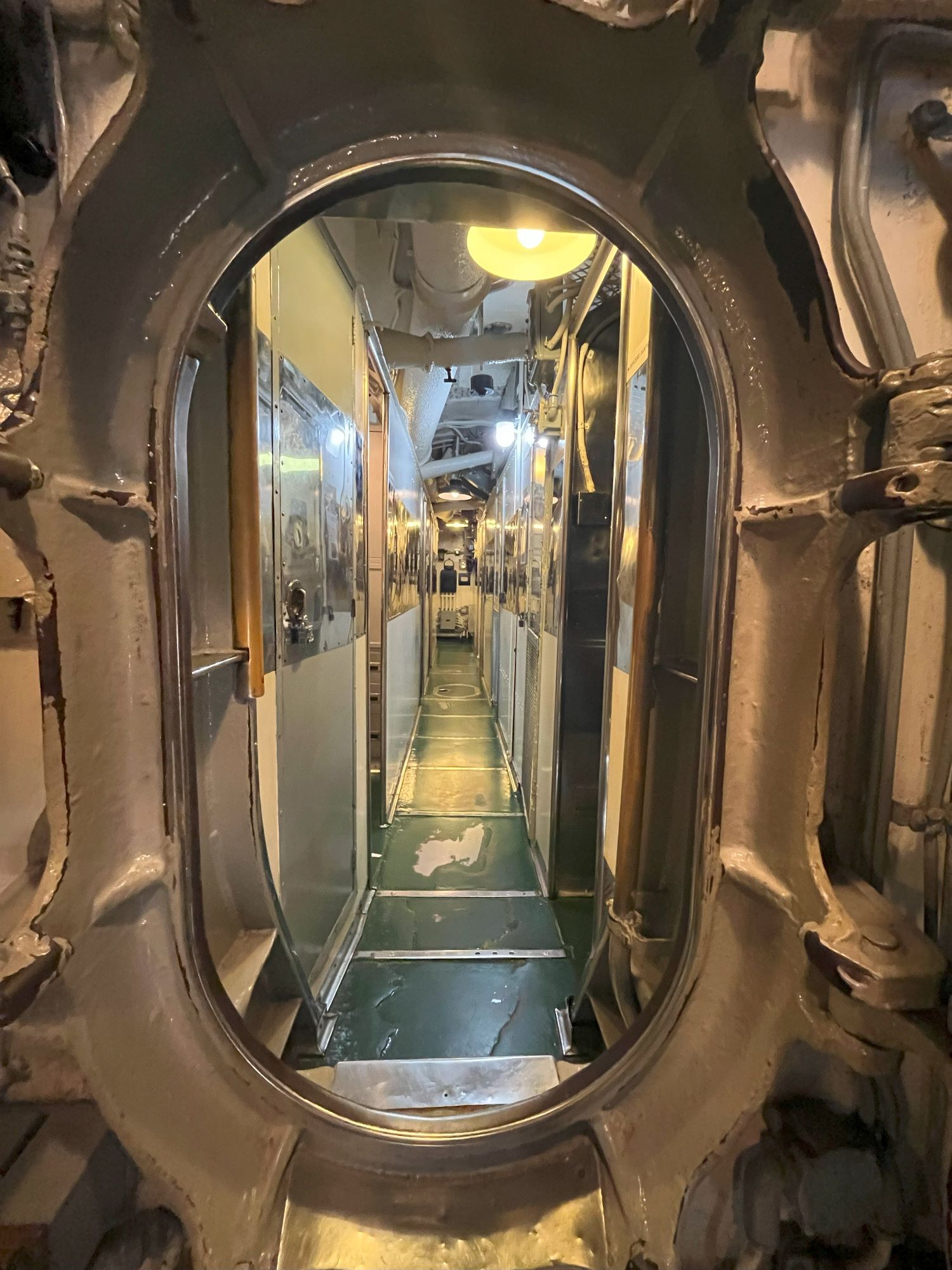
This shot of the main passageway of the boat gives you an idea of how narrow the interior is. Two crewmen need to pass each other sideways.
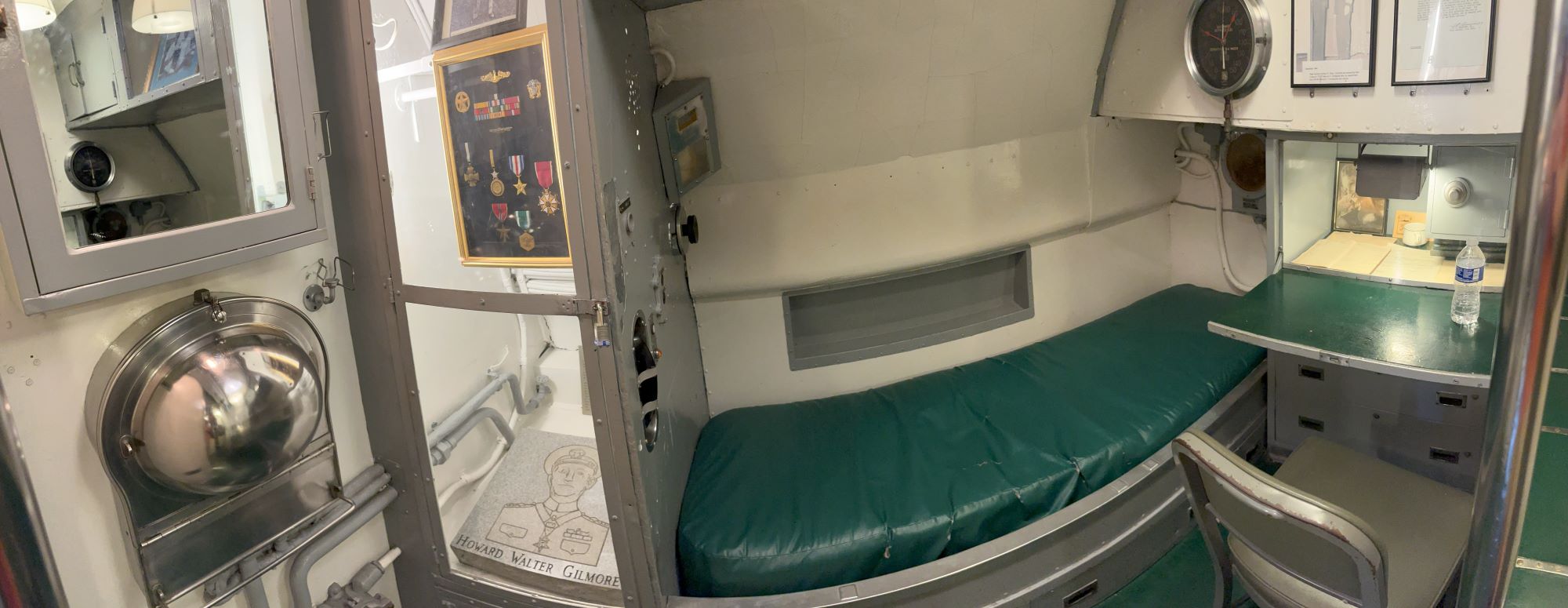
First stop, Captain’s Quarters. There’s a bunk, a desk, a shower and a sink. The wide angle lens makes it look bigger. The room was about 8″x4″. Not bad! But accommodations go downhill from there.
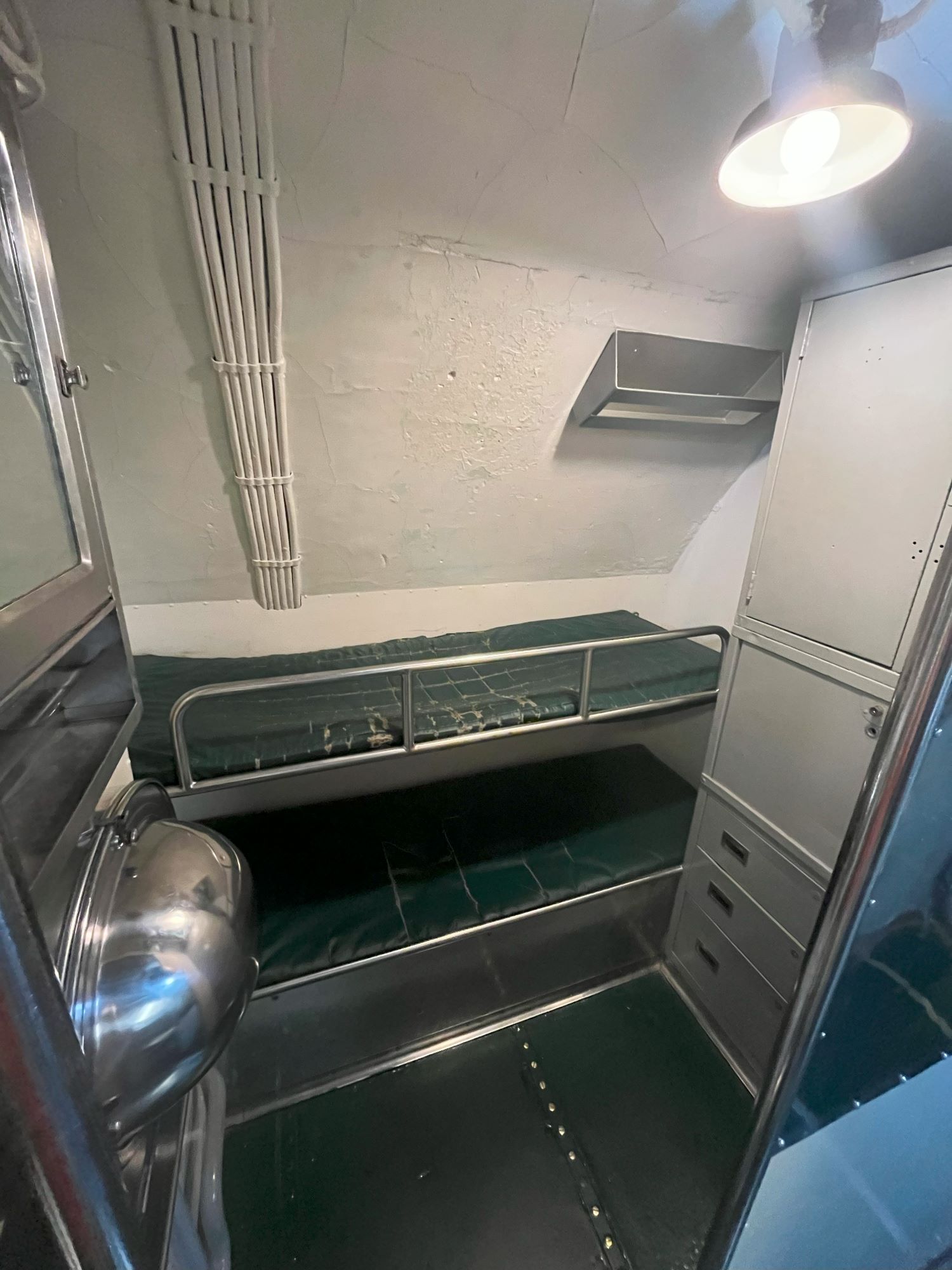
Officers bunk together, two or three to a cabin. Everything those two men own goes in those drawers on the right.
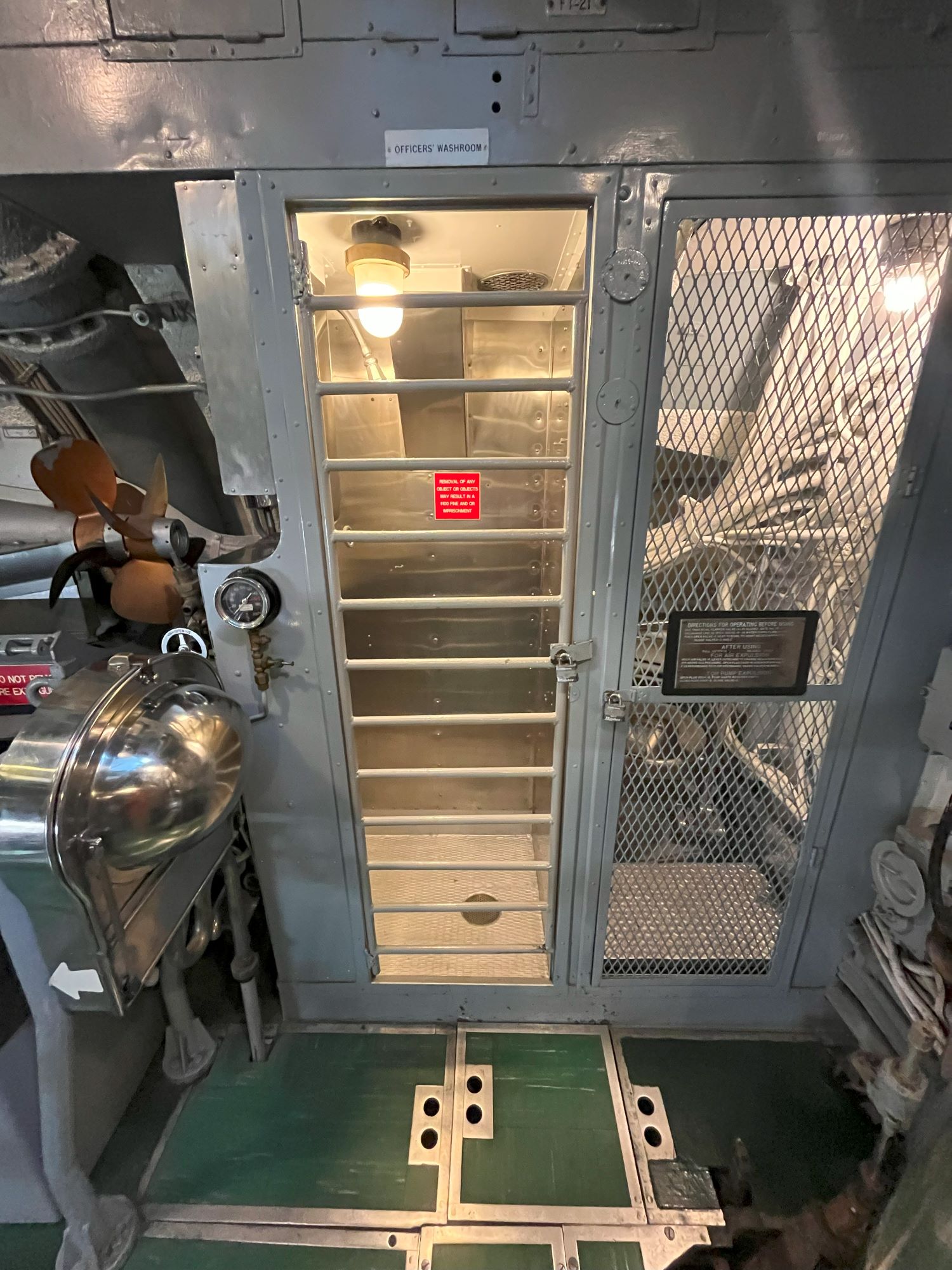
Conveniently located at the rear of the forward torpedo room is the officer’s washroom. (Note the propeller of a stored torpedo sticking out on the left.) The shower is in the middle, the toilet is on the right, and a fold-down sink is on the left. This location has zero privacy.
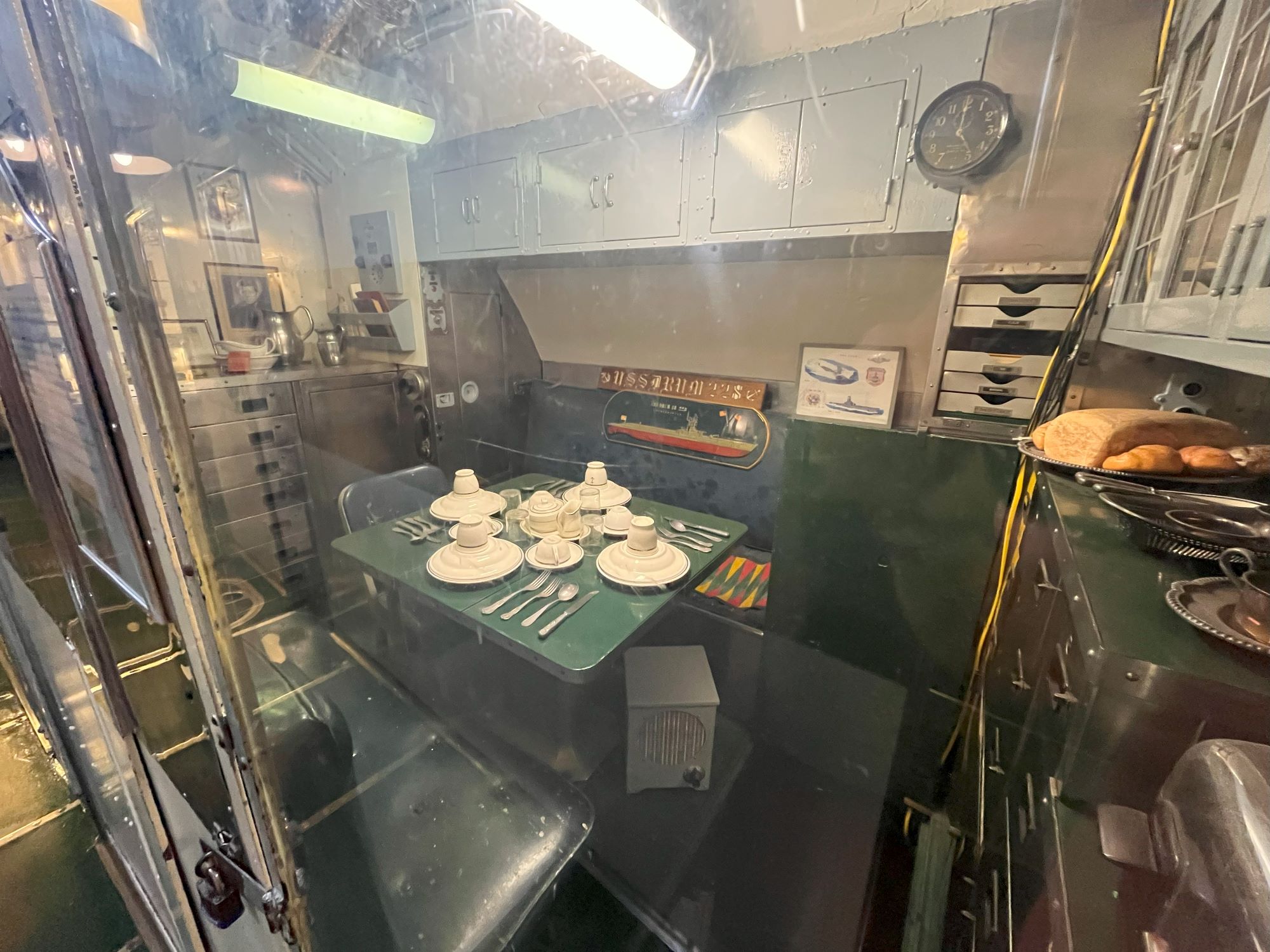
Seven officers ate, planned, and relaxed in the tiny ward room.
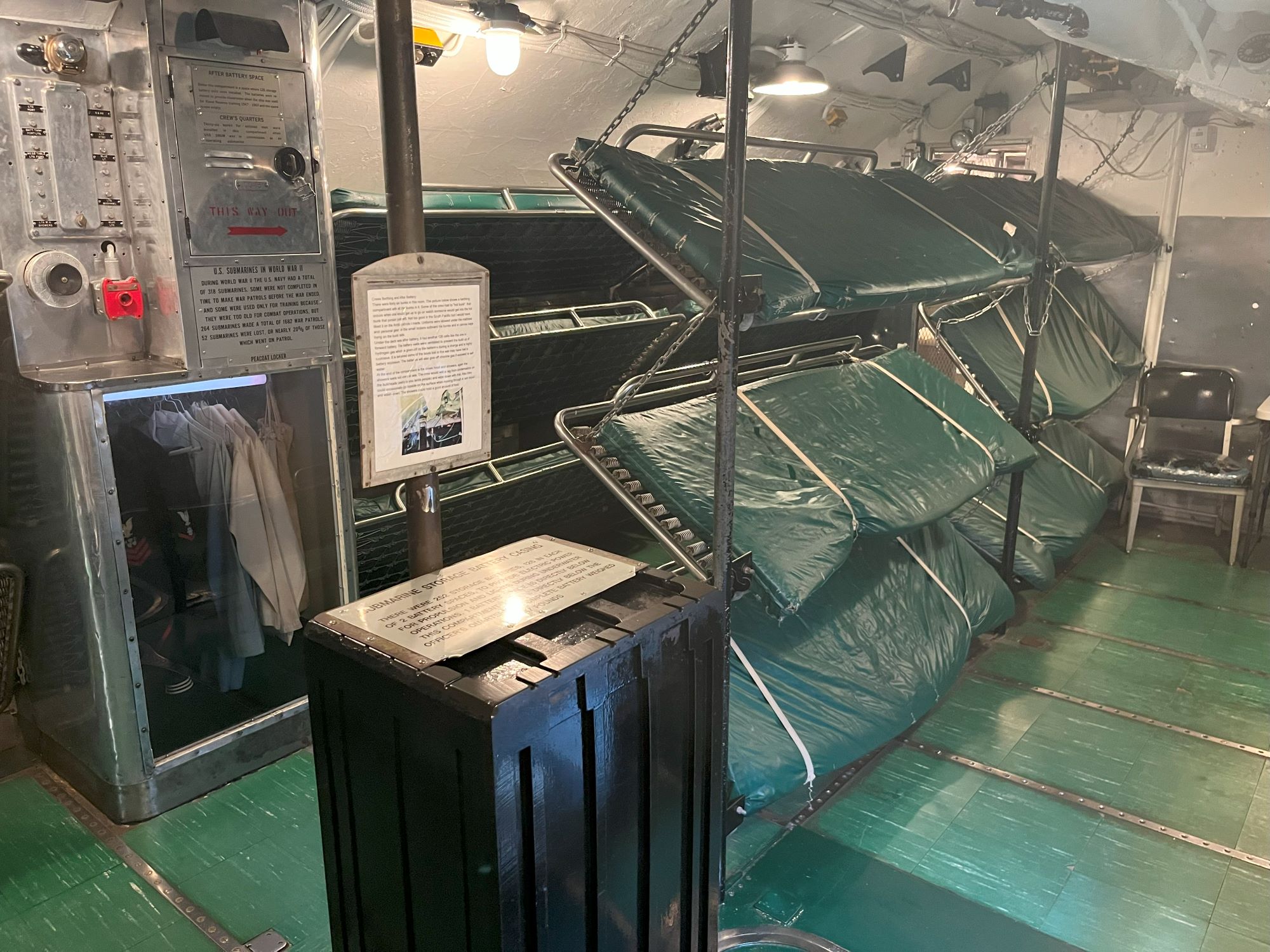
Most of the crew slept in tiered bunks in the Crew’s Berthing. The room on the Drum does not have all the cots installed. When it did, it had 36 bunks crammed in here. But with a crew size of 65, that meant there were not enough to go around. Some sailors “hot bunked”, meaning when you came off duty, you grabbed the “hot bunk” of the sailor taking your place. Sailors had a tiny locker for personal items.
Just off this crew area was the crew’s head and showers, not much bigger than the one for the officers. But not to worry, when out on patrol, water wasn’t wasted on something as unnecessary as a shower. You wiped condensation off the bulkheads with a rag and wiped down with that.
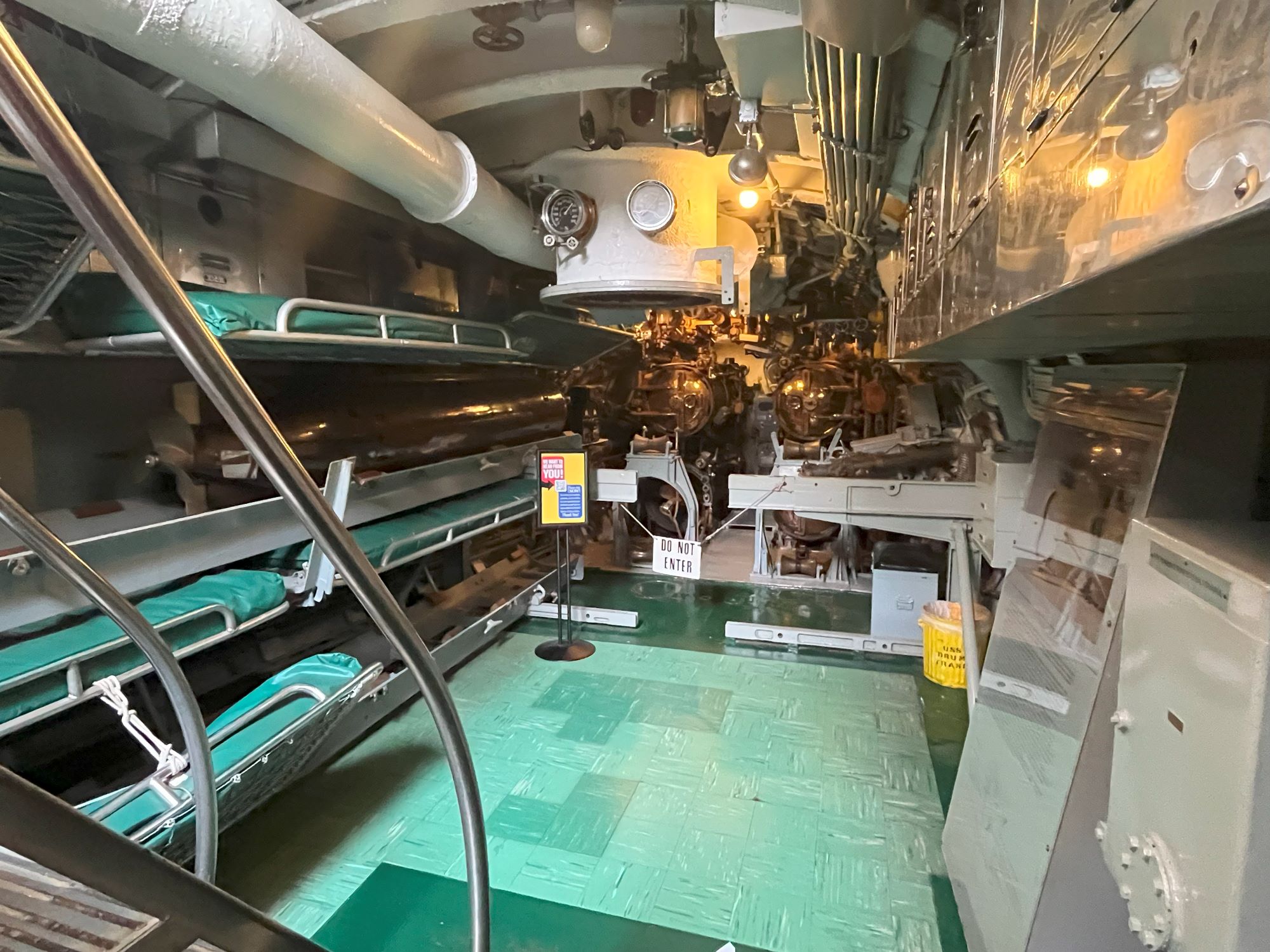
More crew members slept in bunks in the forward and aft torpedo rooms. A submarine has no wasted space.
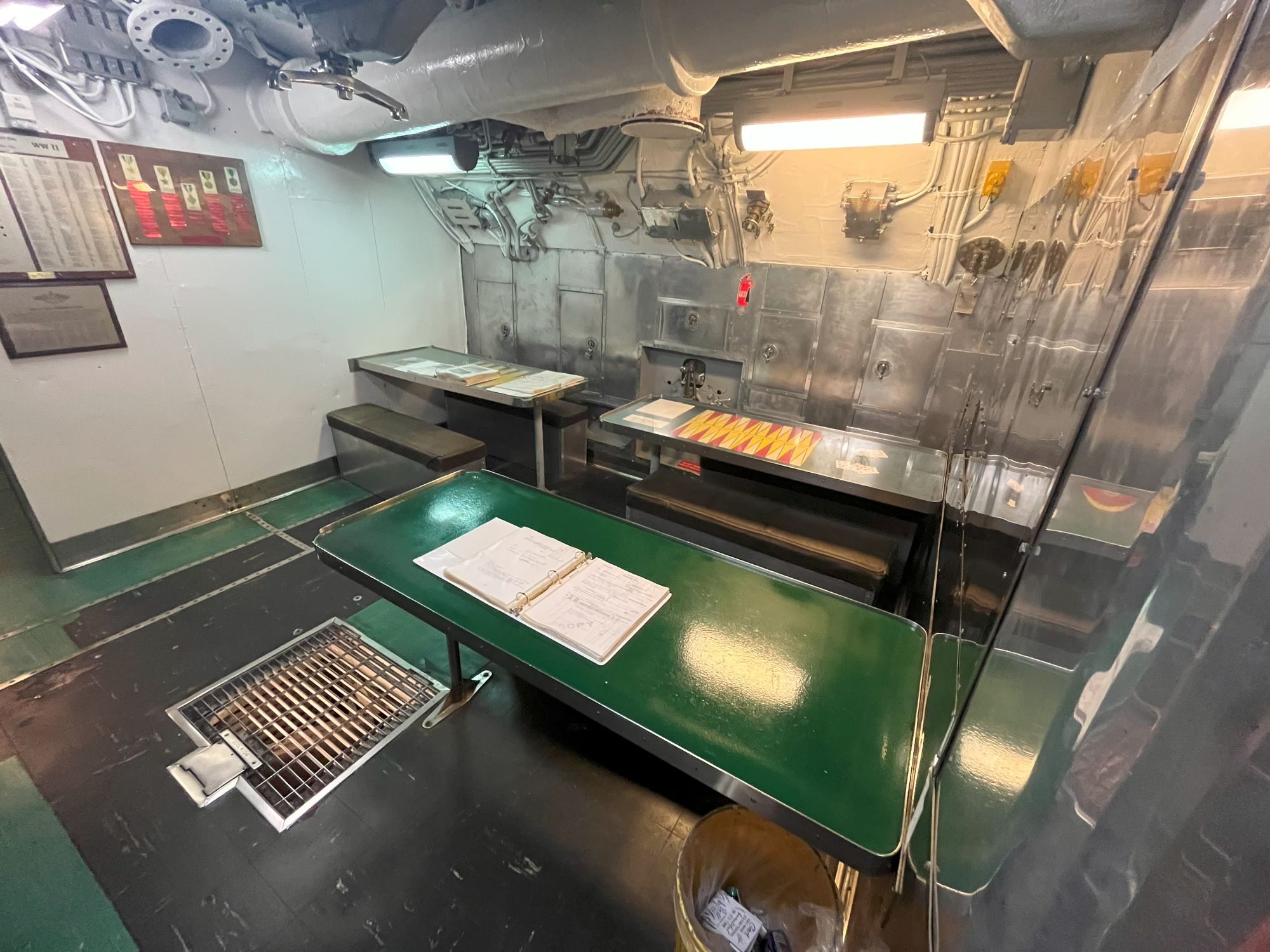
The crew mess was where everyone ate or relaxed when off duty.
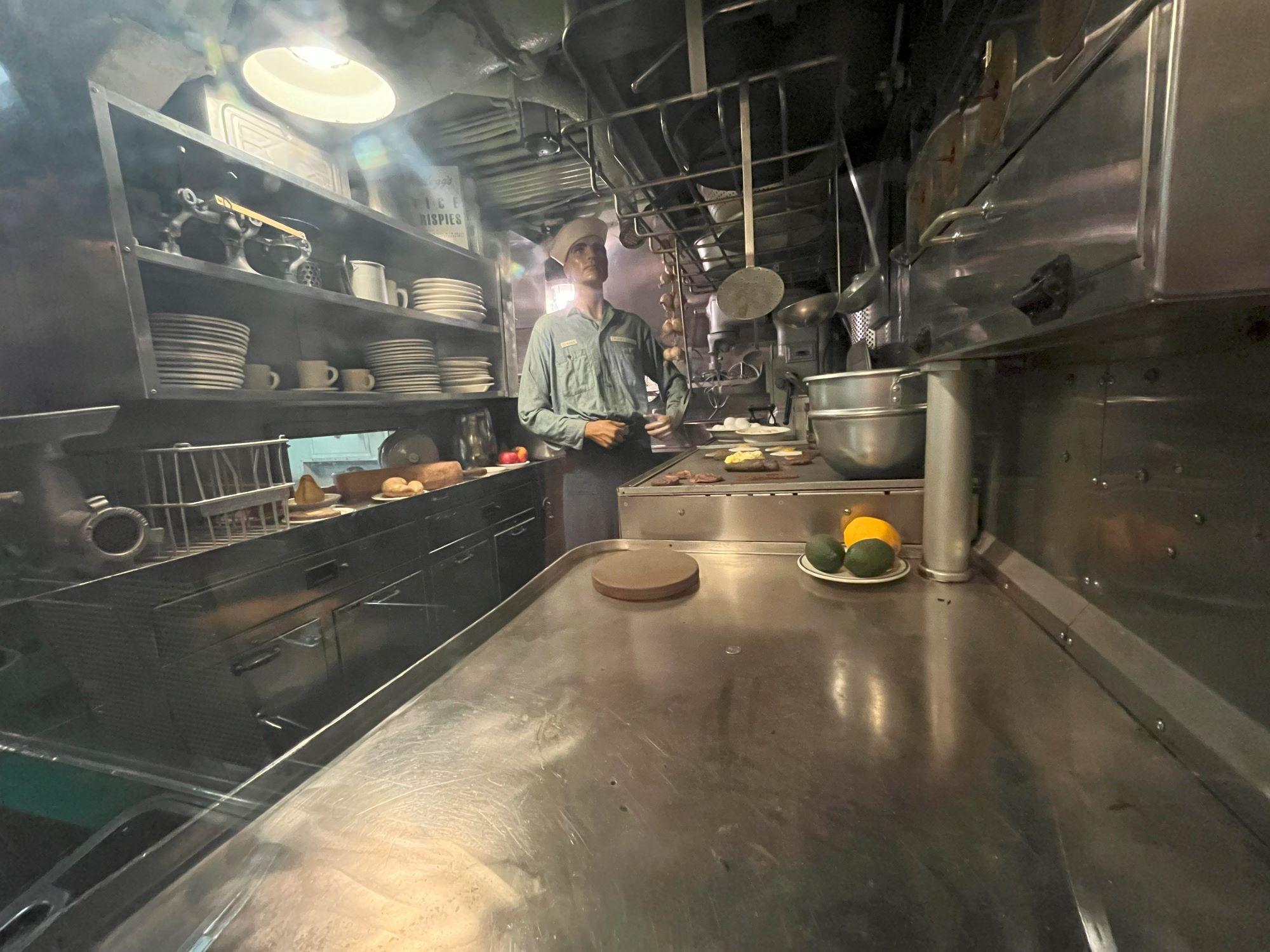
Crew meals were prepared in the galley, with breads baked from scratch and fresh food cooked while it lasted. Subs had to carry provisions to last up to 60 days at sea. An upside to submarine duty was that the Silent Service had the best food in the Navy.
Submarine duty was difficult. All the sailors assigned there were volunteers who went through special, rigorous training. Sailors were crowded into the boat for months at a time with only a rare, if any, glimpse of daylight. The threat of death by enemy depth charges, mechanical failure, or even the boat’s own unreliable Mk 14 torpedoes was ever present. 52 of the Navy’s 288 submarines never returned from patrol.
I recommend visiting the Drum in Mobile, Alabama, or one of these others:
- USS Bowfin (SS-287) – Pacific Fleet Submarine Museum, Pearl Harbor, Hawaii
- USS Silversides (SS-236) – USS Silversides Submarine Museum, Muskegon, Michigan
- USS Becuna (SS-319) – Independence Seaport Museum, Philadelphia, Pennsylvania
- USS Cobia (SS-245) – Wisconsin Maritime Museum, Manitowoc, Wisconsin
- USS Cod (SS-224) – Cleveland, Ohio
- USS Pampanito (SS-383) – San Francisco Maritime National Historical Park, San Francisco, California
- USS Torsk (SS-423) – Inner Harbor, Baltimore, Maryland
- USS Batfish (SS-310) – War Memorial Park, Muskogee, Oklahoma
- USS Razorback (SS-394) – Arkansas Inland Maritime Museum, North Little Rock, Arkansas
- U-505 – Museum of Science and Industry, Chicago, Illinois
Find one close to home and check it out.
You can learn more about those erratic Mk 14 torpedoes in the third page of bonus material right here.
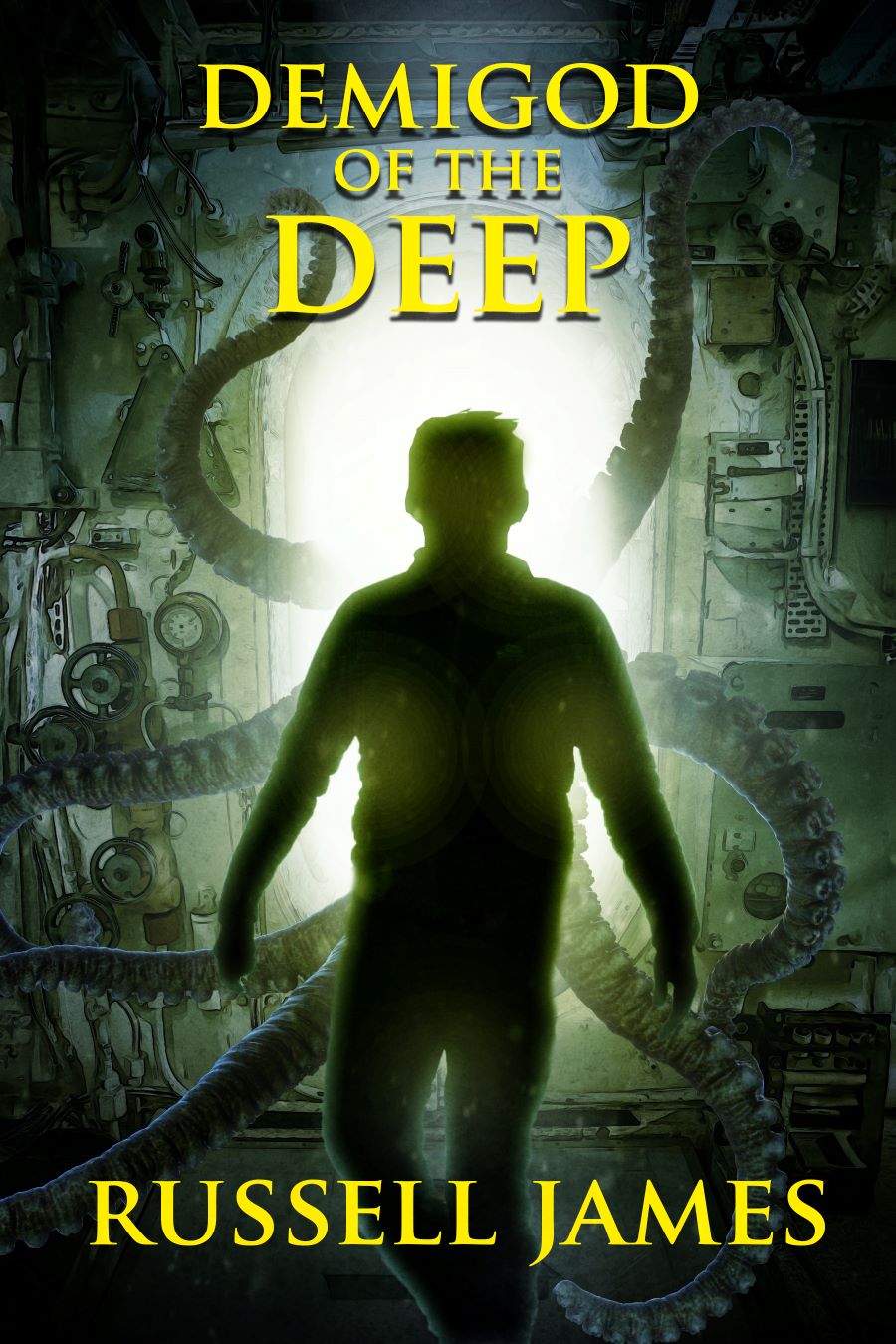
It is 1942, and a secret organization within the SS called the Ahnenerbe is working hard to harness occult powers for the war effort. Allied intelligence reports indicate that its leader, Gruppenführer Karl Weitz, and a Finnish expert have discovered a supernatural force that can fuel a new, more powerful U-boat.
Major Ray Hawkins commands the Office of Supernatural Directives, a clandestine U.S. Army unit tasked with stopping the Ahnenerbe. He recruits convicted mutineer U.S. Navy Lieutenant Caleb Kendall to infiltrate a secret German base and verify the reports.
Caleb discovers the Germans have captured the Iku-Turso, an ancient demigod of the sea, so powerful that just being exposed to it can kill a man. Once it is fueling a U-boat, the submarine would never need to surface and would become impervious to mines and depth charges.
It’s a race against time and across the sea to stop Weitz. Caleb’s only help comes from a crew of Free French submariners, an untested Army Ranger, and some unlikely civilian believers in archaic Finnish myths. The odds of success are slim, but Caleb must try. If this submarine launches with the demigod of the deep on board, it will sweep the Atlantic clear of Allied ships, and the war will be lost.
If you don’t already have your copy of Demigod of the Deep you can get it here on Amazon, or anywhere you buy your books.