
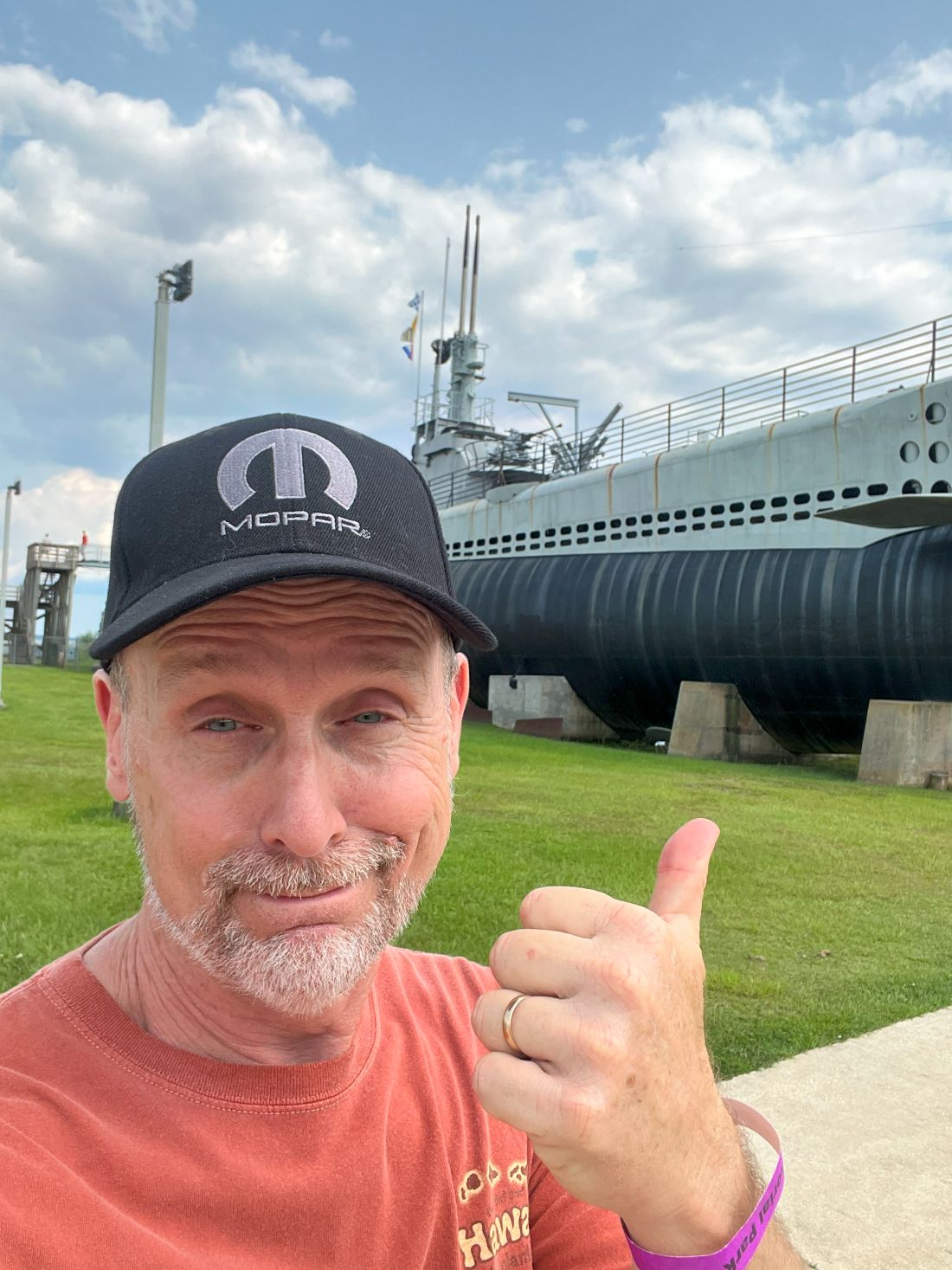
Much of the third book in the Office of Supernatural Directives series, Demigod of the Deep, takes place on submarines. I was able to tour the U.S.S. Drum, a WWII era submarine and thought I’d share some pictures to go along with the novel.
In this post we’ll look at the technical parts of the submarine and specifically some of the ones mentioned in the novel.
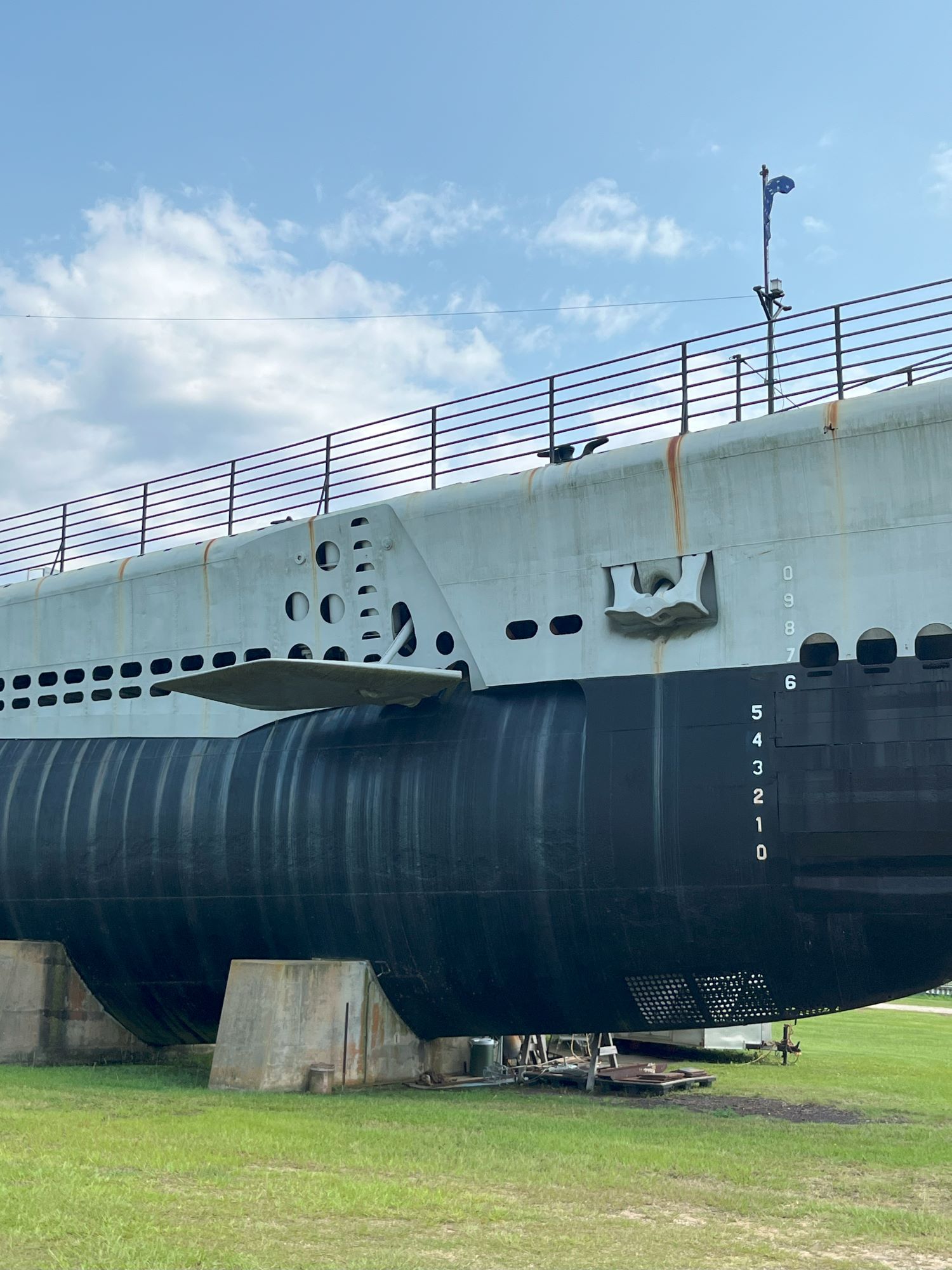
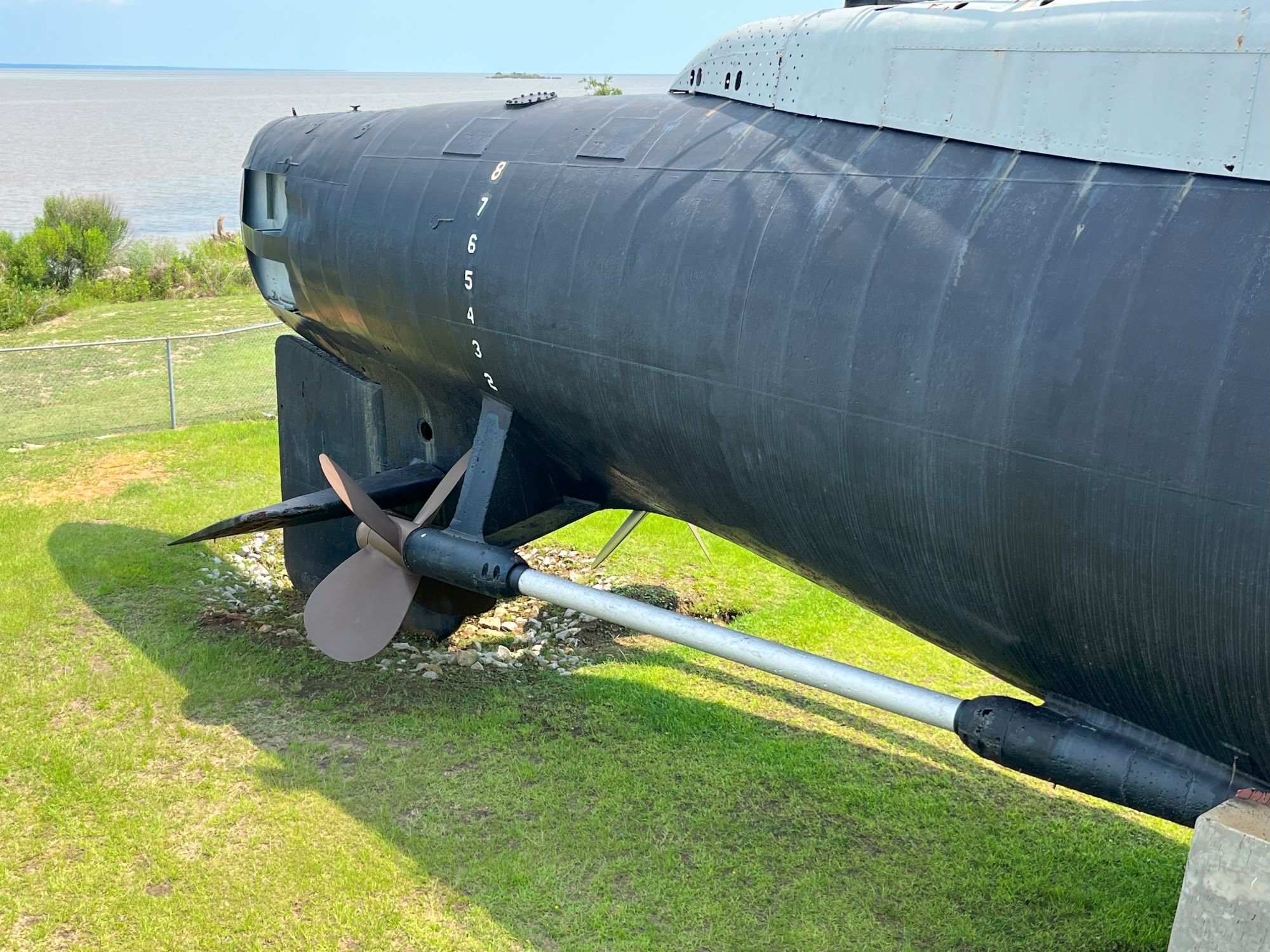
We’ll start on the outside. The submarine’s sleek hull has diving planes on the bow and trim planes at the stern. The forward ones aim the bow up and down and the rear ones work to keep the submarine level. Diving planes end up being important in the novel.
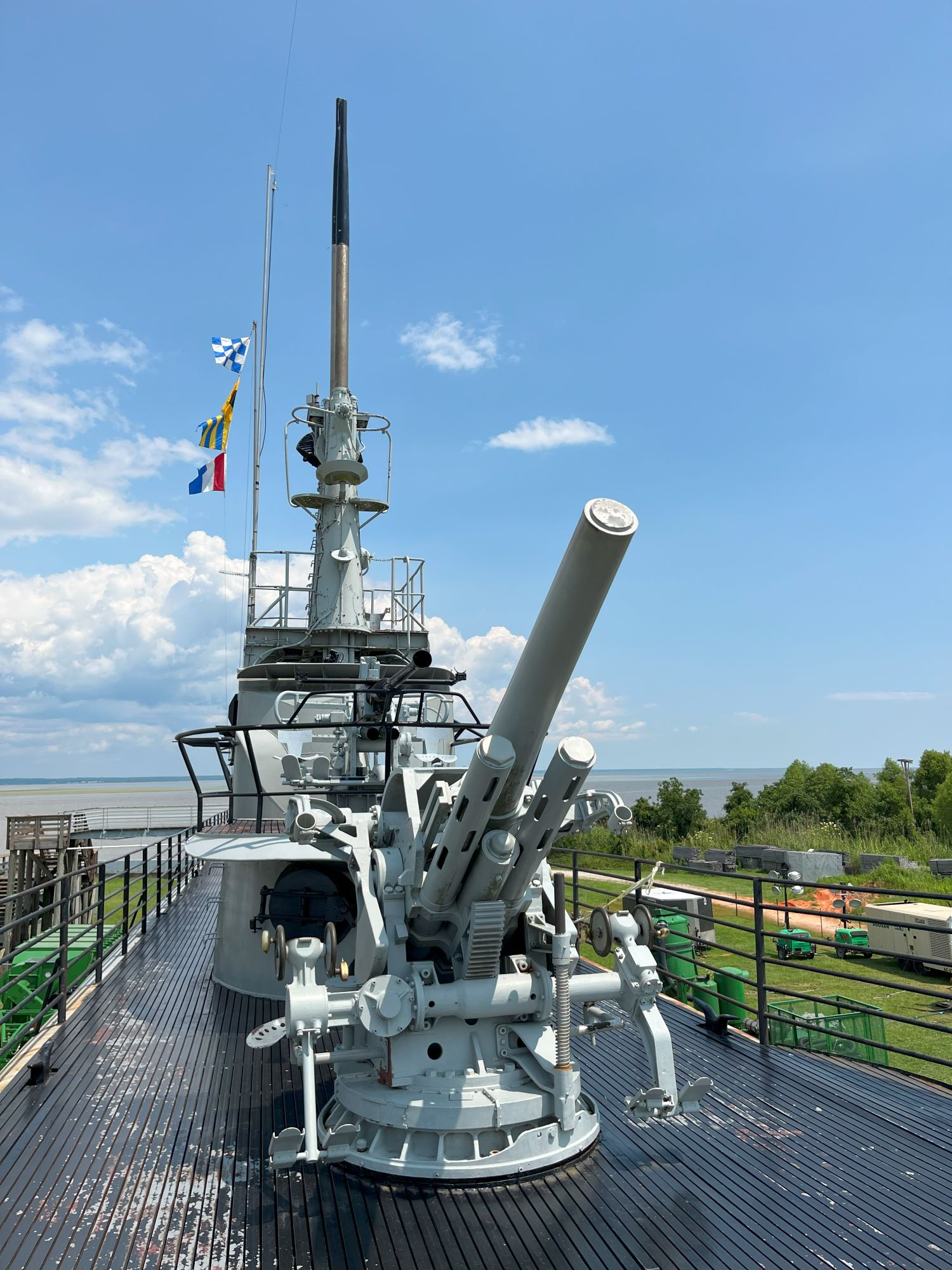
While torpedoes fired when submerged are the primary method of sinking a ship, submarines also have a deck gun for that task when surfaced. Less expensive to fire and more reliable to hit the target, the deck gun was used anytime the situation permitted it.
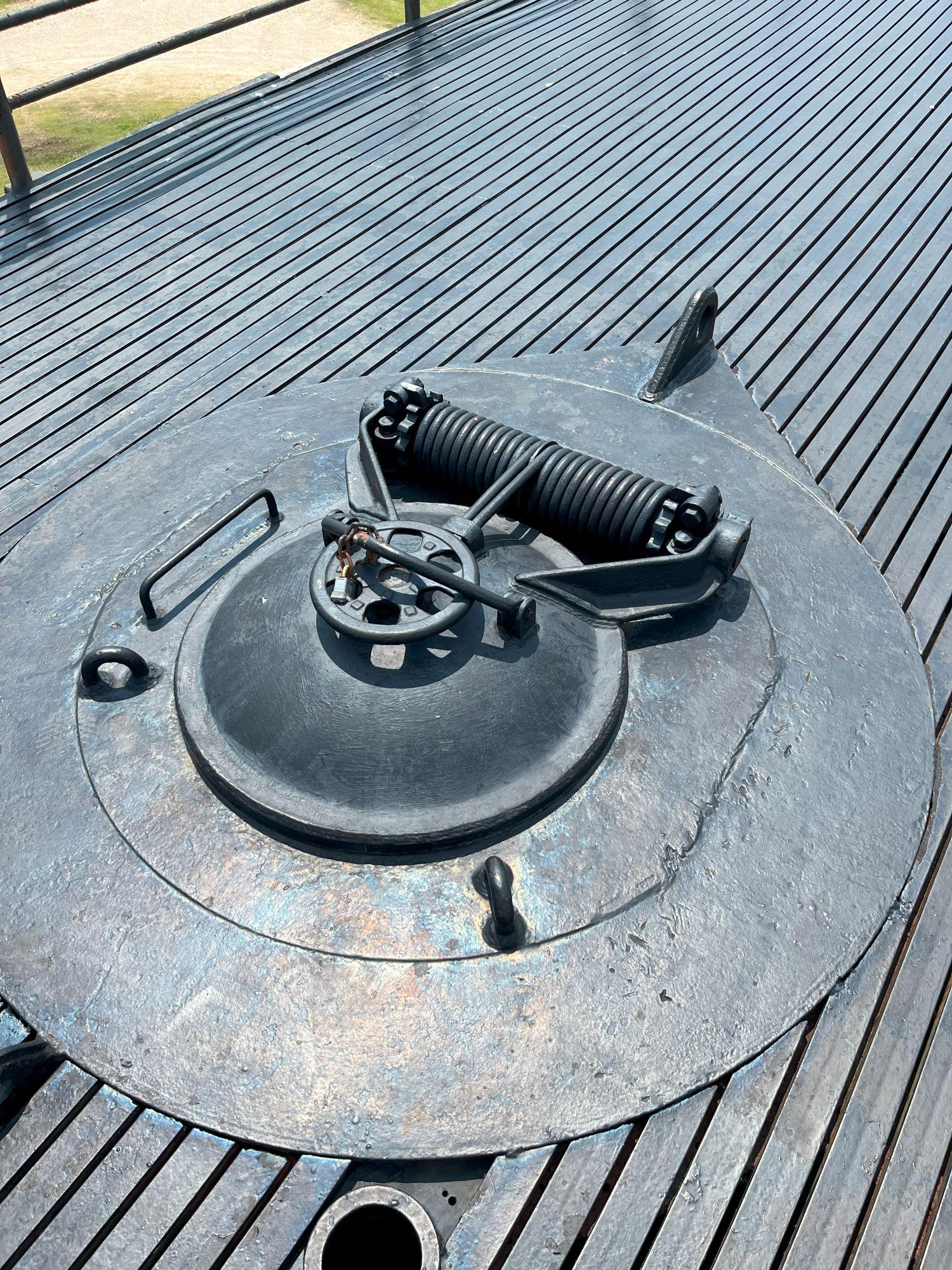
Hatches forward, aft, and atop the conning tower are the only way for the crew to get out of the boat. These definitely play a part in the story.
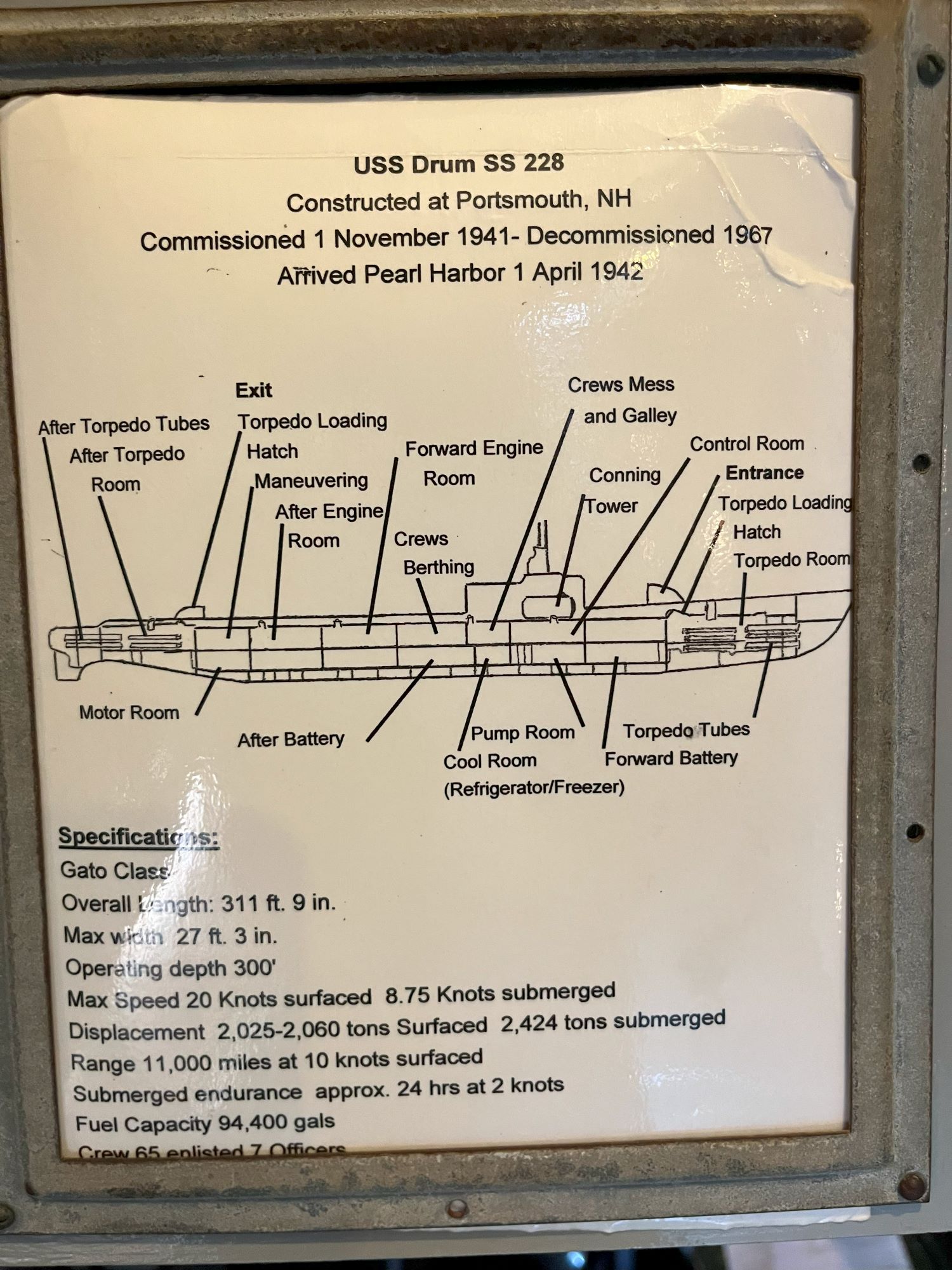
Now we’ll head below deck. This diagram posted inside the U.S.S. Drum is representative of most submarines, and was the reference I used in the descriptions in the novel. In this post we’ll look at the operational areas. Note that most of the pictures were shot using a wide angle lens and make all the spaces look much larger than they are.
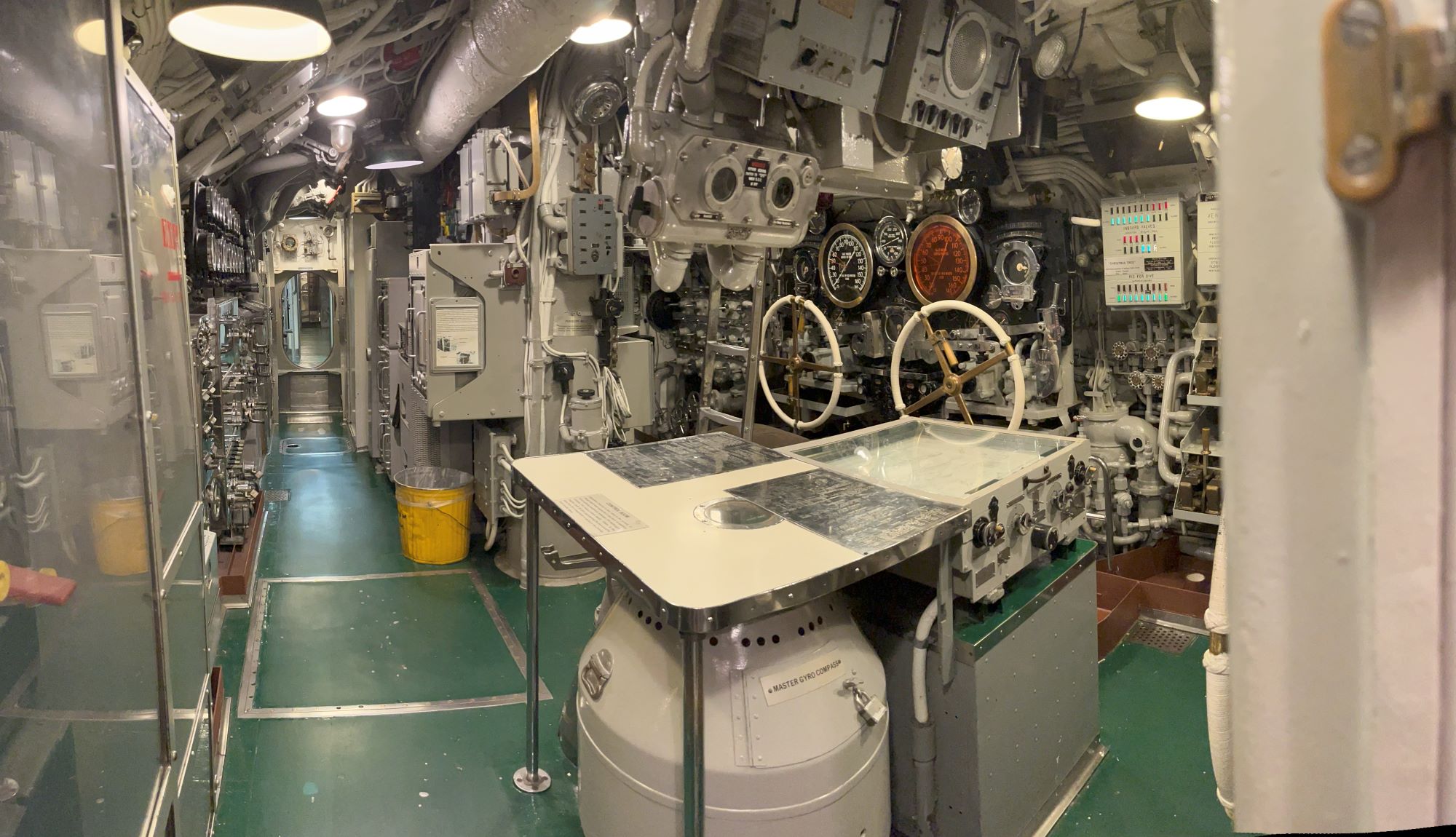
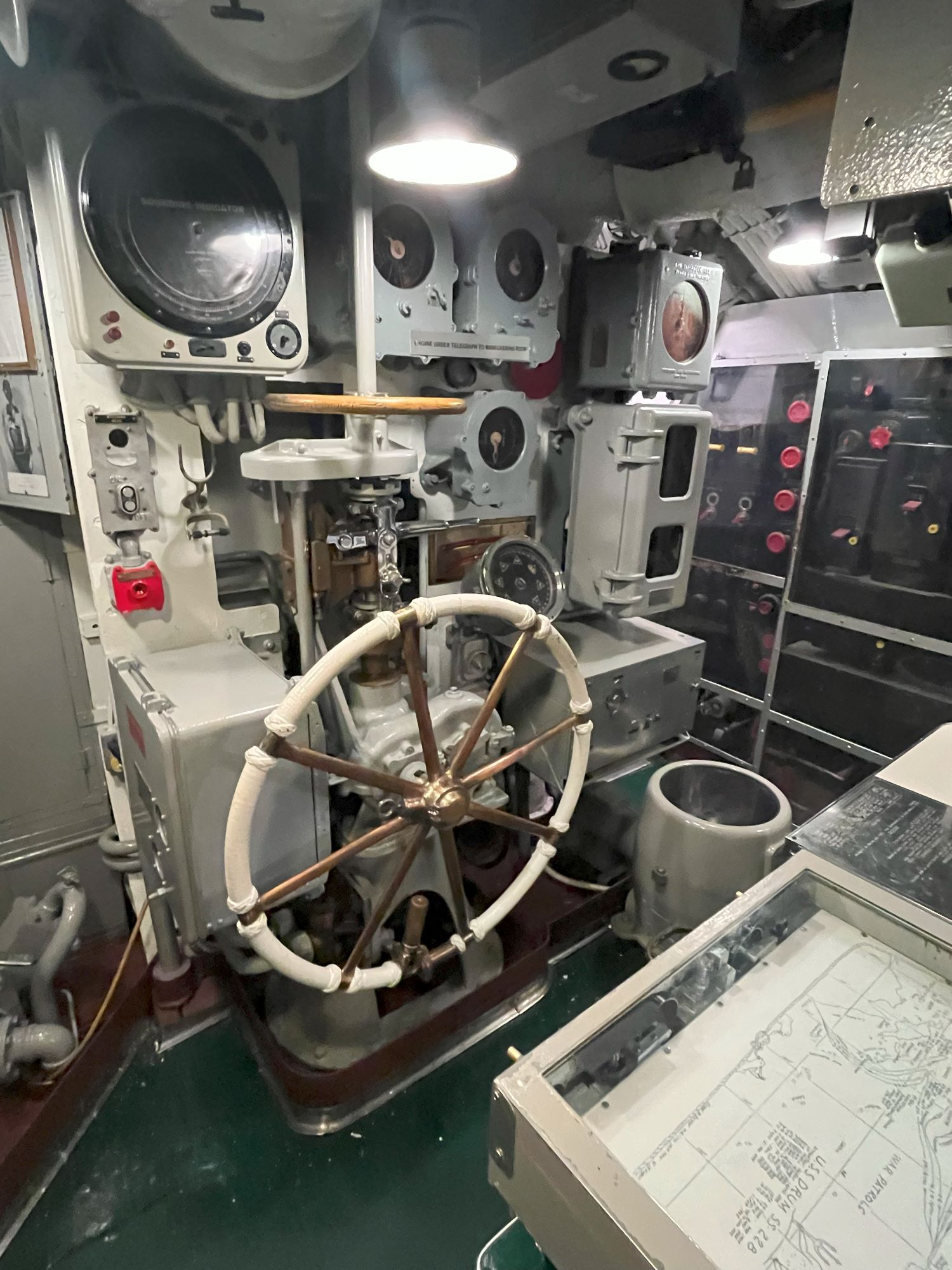
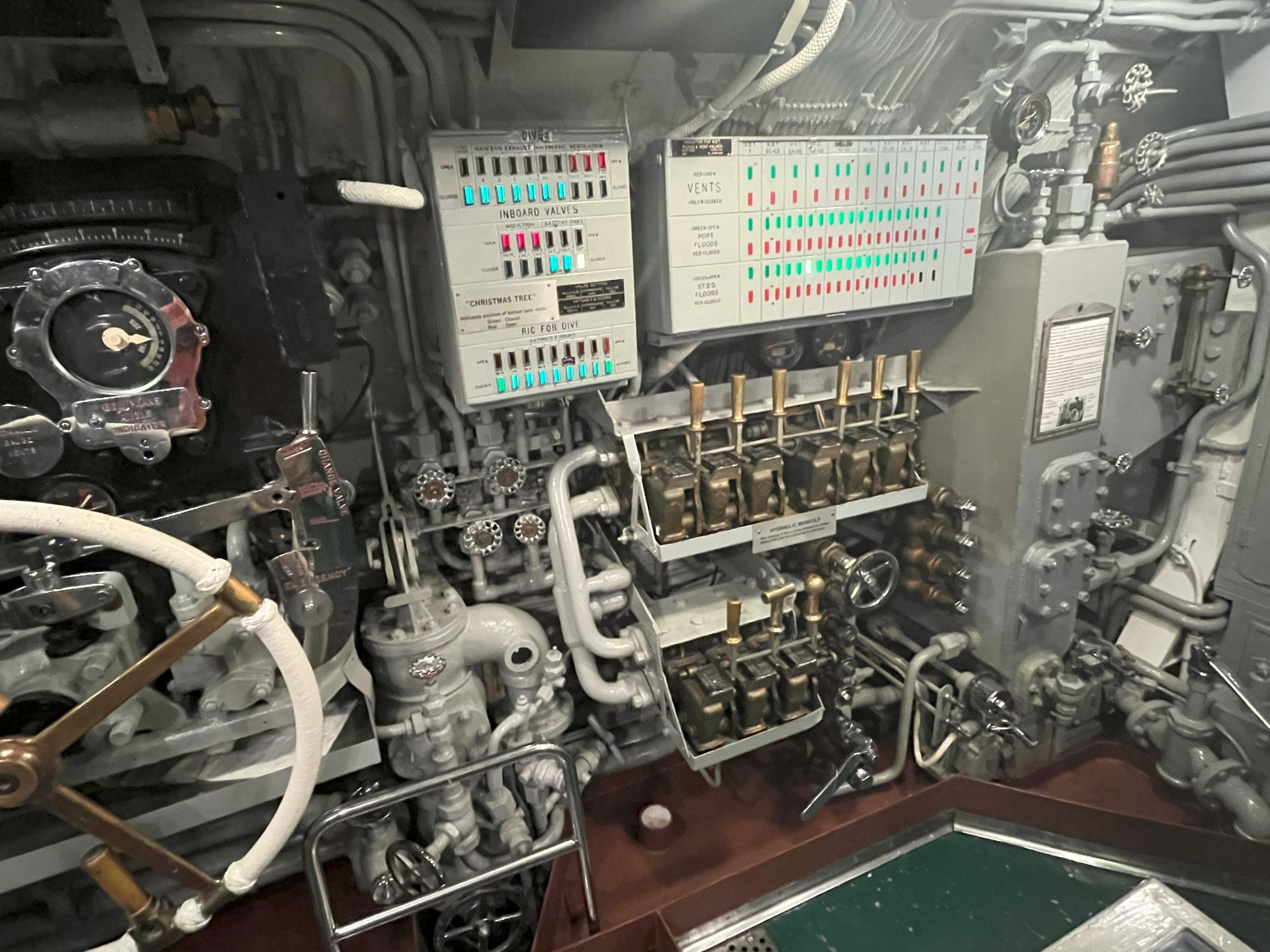
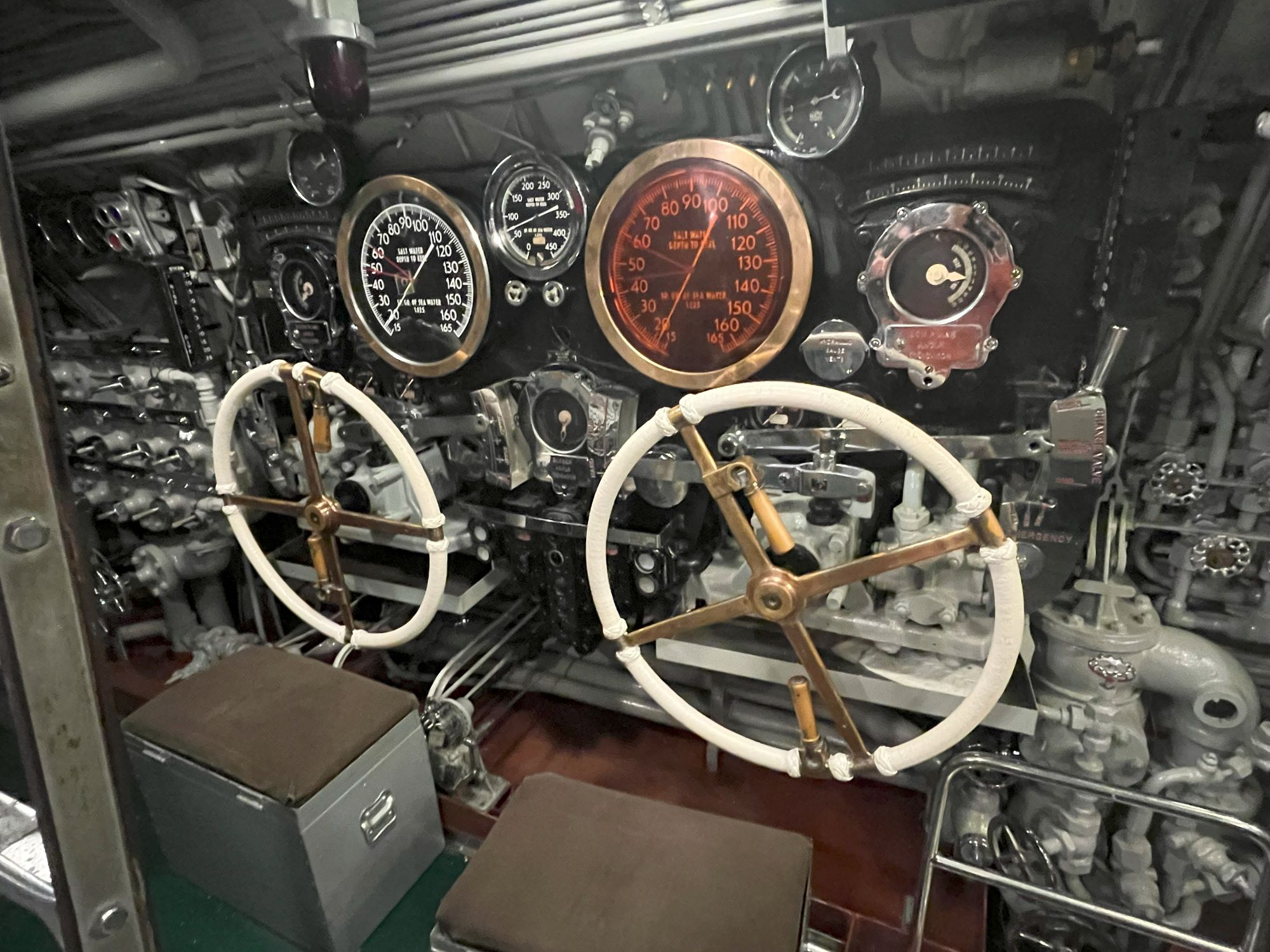
The boat is sailed from the control room. A number of sailors all crowded in here to perform all the functions needed to keep the submarine on course and at the correct depth. Submarine operations was a definite team effort.
On the table, the sub’s position had to be tracked on a map, while underwater, with no visual references or GPS. Talk about sailing skill!
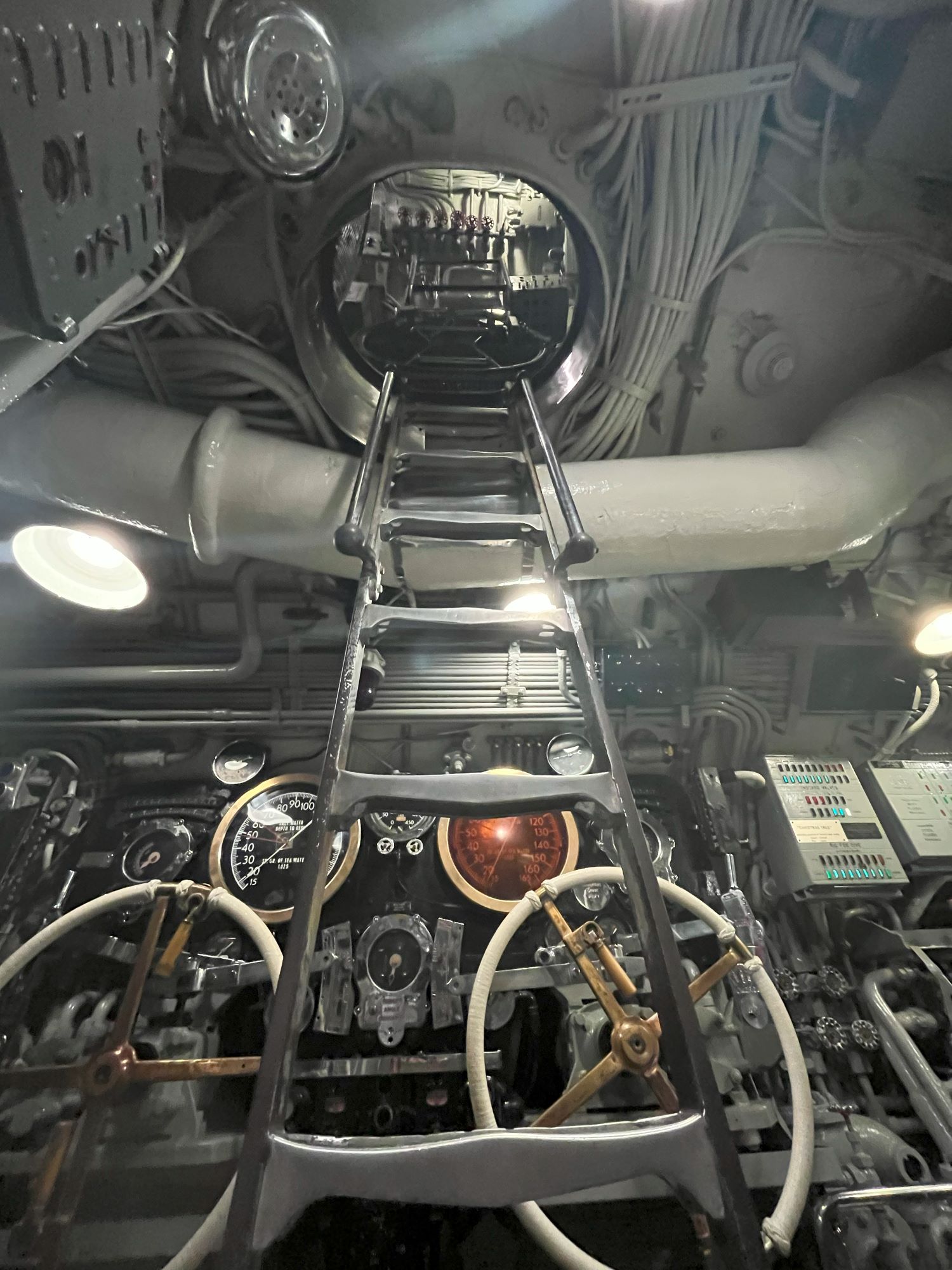
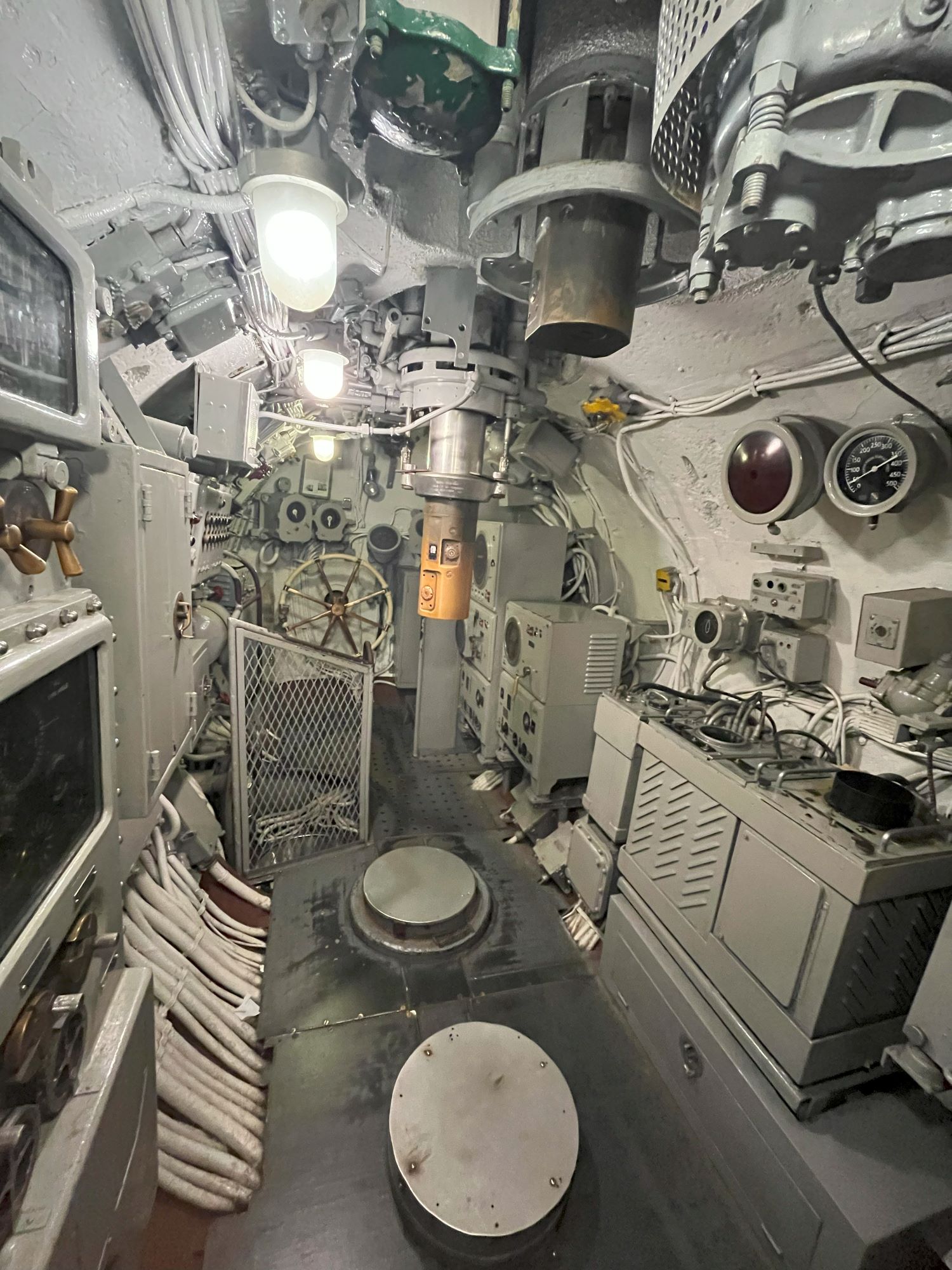
A ladder in the control room (left) takes you up into the conning tower (right). The picture makes the tiny conning tower look much bigger than it is. Four or so crewmembers would join the captain in here during an attack. Two periscopes here let the captain determine the range and the heading of the enemy ship.
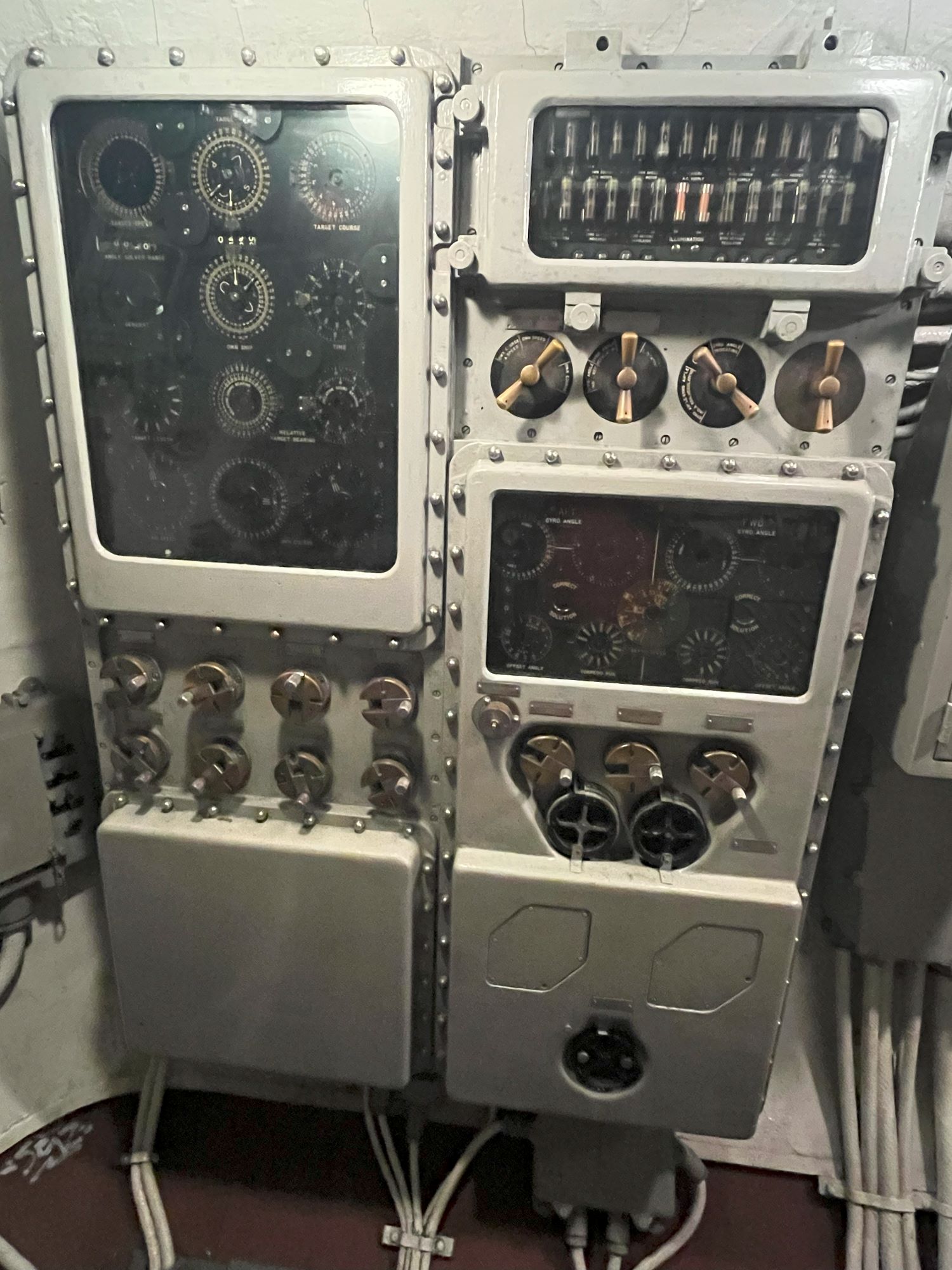
In the conning tower is the torpedo data control computer. This actual, early computer was used to calculate the settings on the torpedo to hit the target. Zoom in on the picture and see all the different variables this operator had to take into consideration.
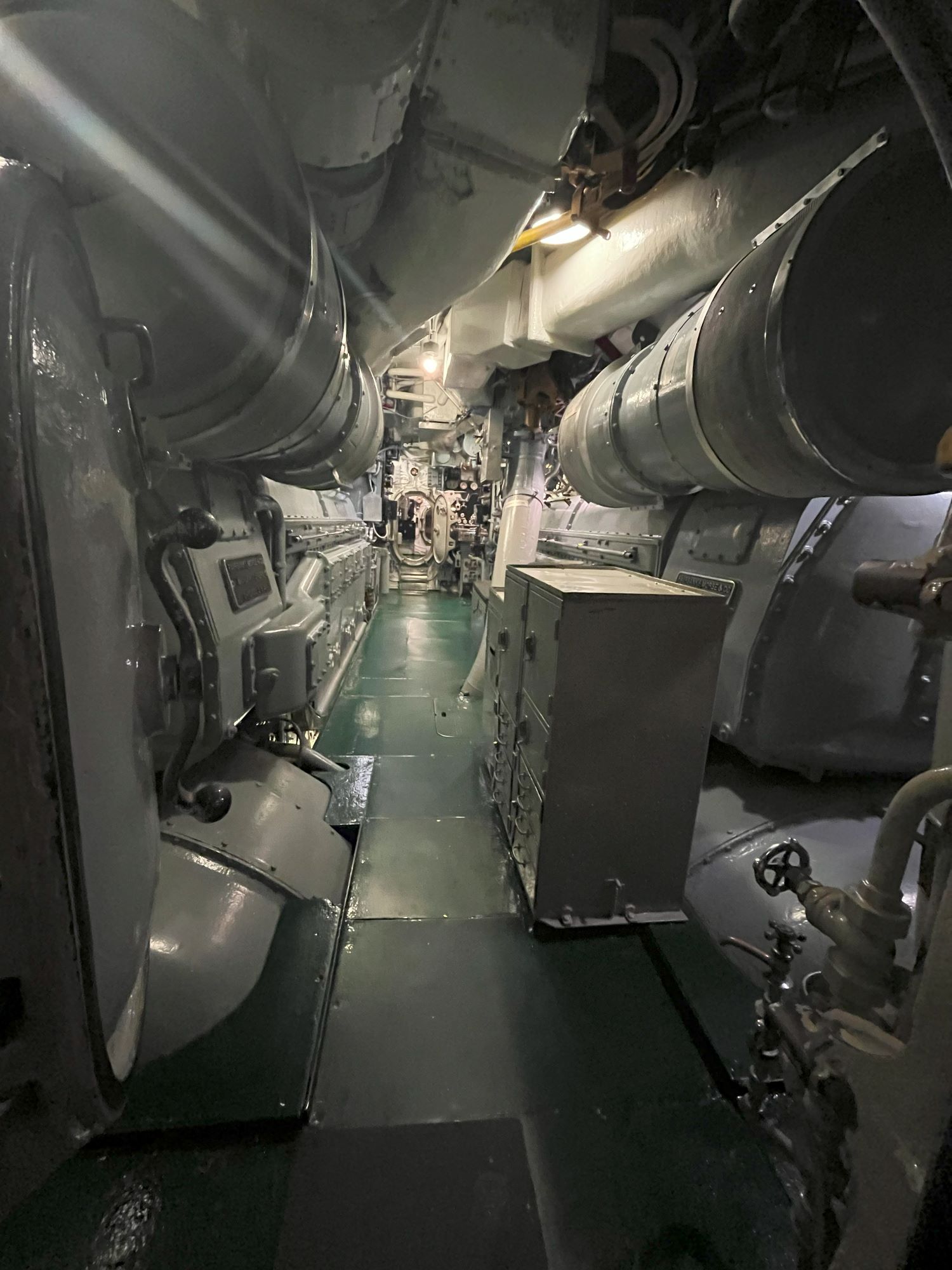
Nearer the stern are the engine rooms. When sailing on the surface, massive diesel engines run generators that power the twin electric motors that drive the propellers. The Drum could do 20 knots surfaced.
Under the deck is a huge bank of batteries. When submerged, these sent current to drive the motors. Underwater, the Drum can only do four knots. She was not going to outrun an angry destroyer once she sank a ship in a convoy.
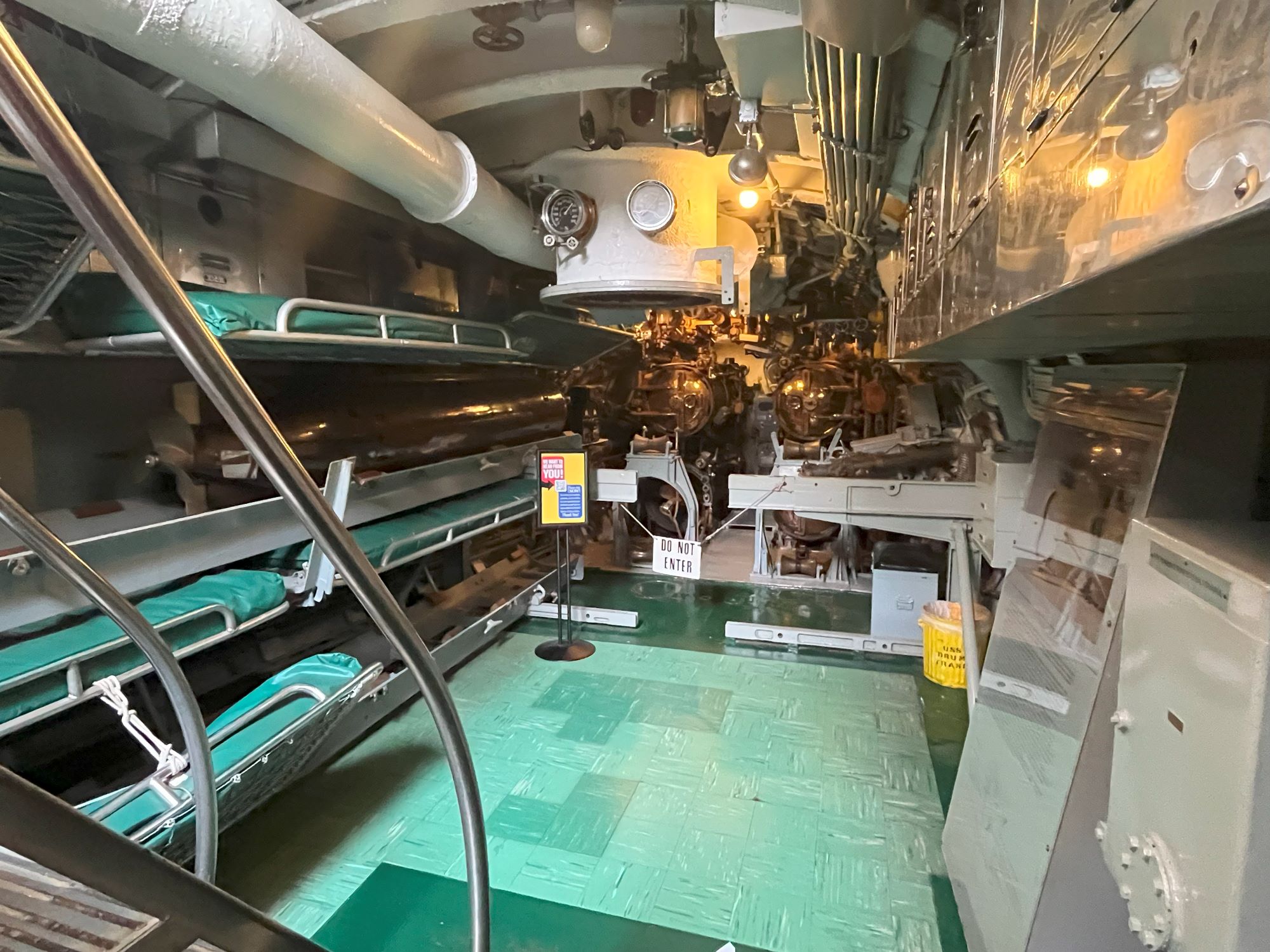
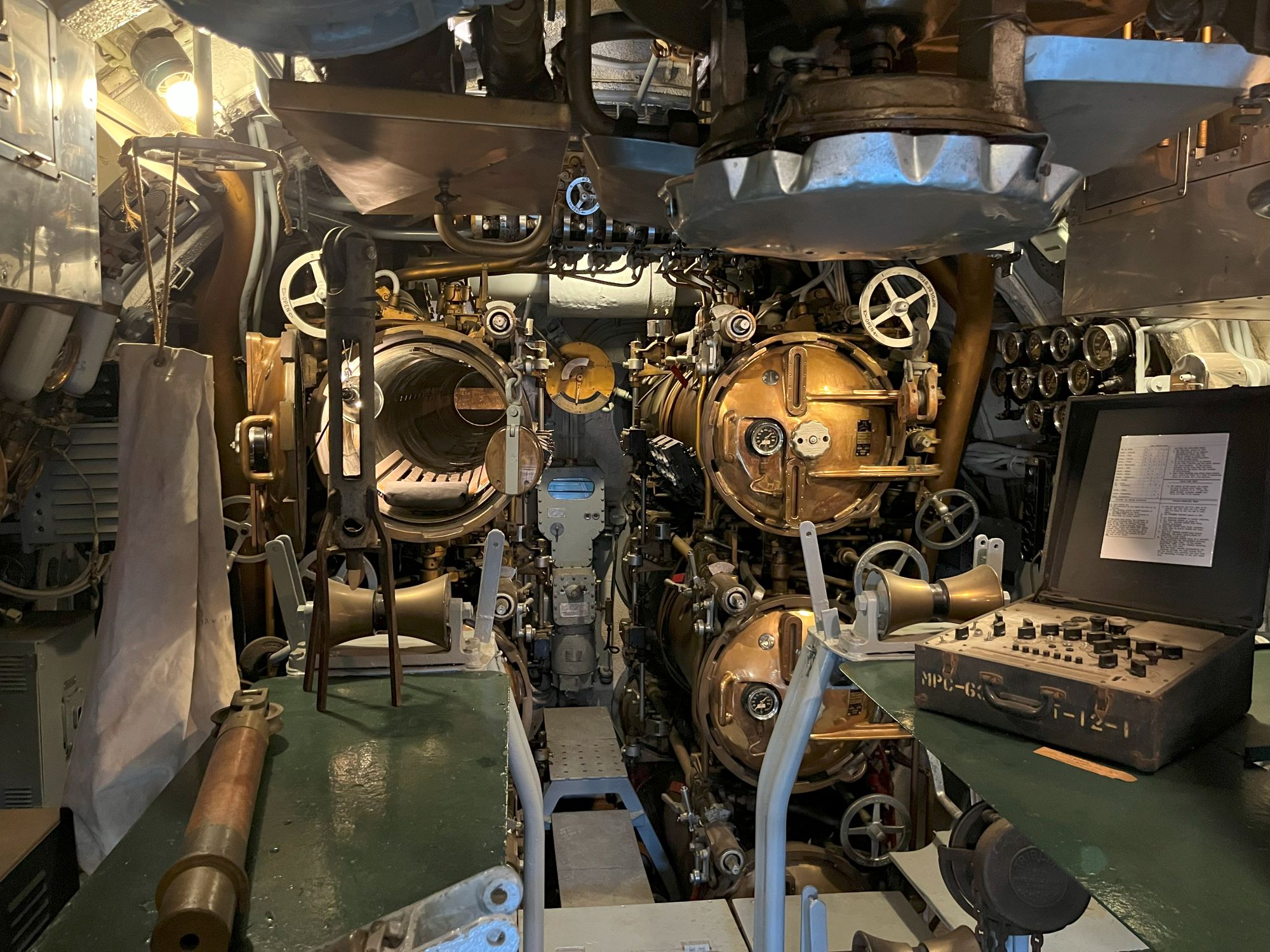
The submarine has a forward torpedo room with six tubes and an aft torpedo room with four. Each room also has torpedo racks for storage, eight forward and six aft. Sailors also bunked in the torpedo rooms, but I’ll save details on that, and the torpedoes, for other posts.
American submarines were effective. The United States began the war with 87 submarines (many obsolete by 1941 standards) and 201 more were built during the war. U.S. submarines destroyed 1,314 enemy warships in the Pacific, representing 55% of all Axis power warships lost and a total of 5.3 million tons of shipping. Near the war’s end, American submarines had difficulty finding targets because Japanese shipping had been decimated.
But that sunk tonnage came with a price. Out of 16,000 U.S. submariners, the force lost 375 officers and 3,131 enlisted men in 52 submarines. That is a high casualty rate, but still the best of any submarine service during the war.
To find out about living conditions aboard submarines in Word War II, check out Bonus Material #2 for Demigod of the Deep.
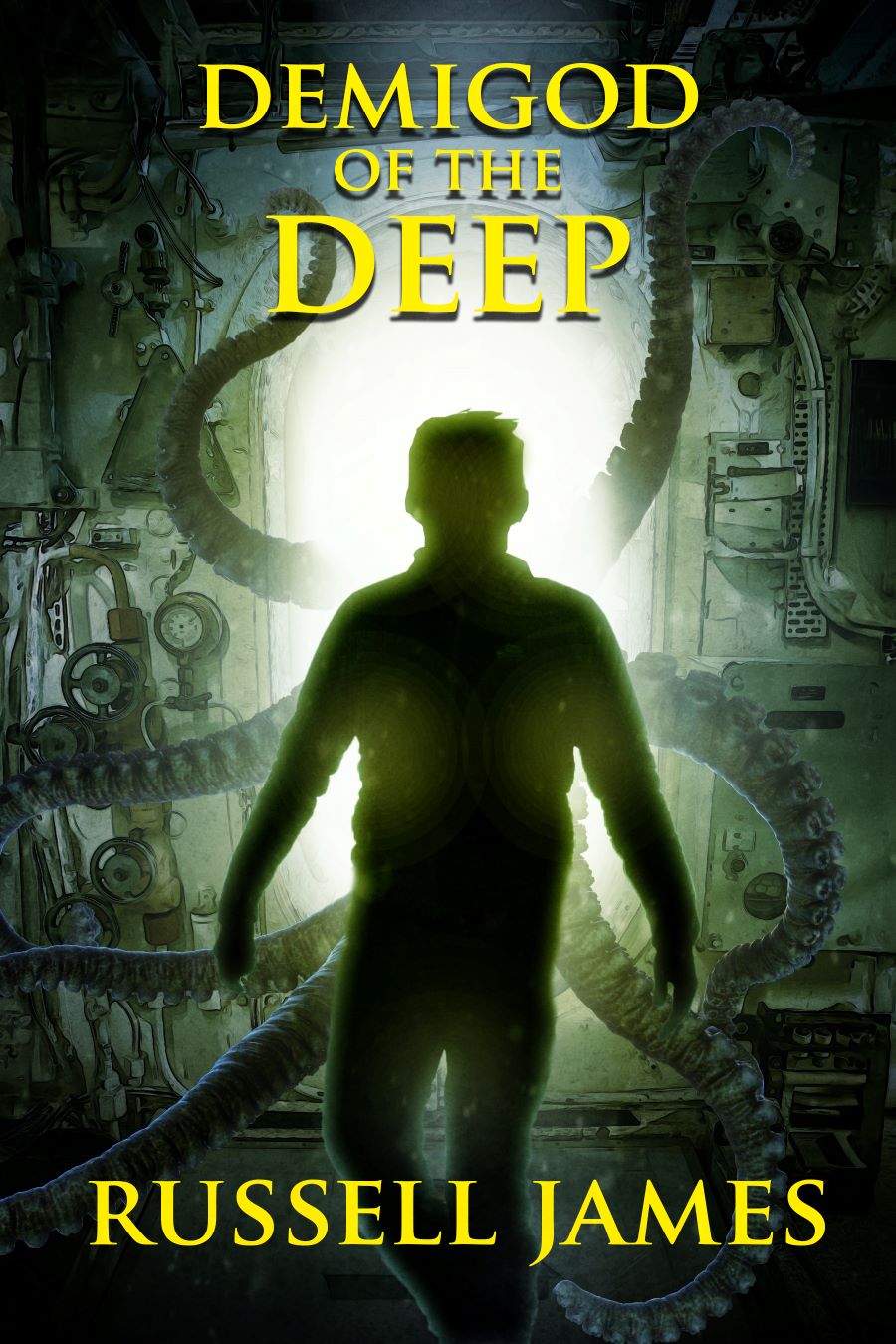
It is 1942, and a secret organization within the SS called the Ahnenerbe is working hard to harness occult powers for the war effort. Allied intelligence reports indicate that its leader, Gruppenführer Karl Weitz, and a Finnish expert have discovered a supernatural force that can fuel a new, more powerful U-boat.
Major Ray Hawkins commands the Office of Supernatural Directives, a clandestine U.S. Army unit tasked with stopping the Ahnenerbe. He recruits convicted mutineer U.S. Navy Lieutenant Caleb Kendall to infiltrate a secret German base and verify the reports.
Caleb discovers the Germans have captured the Iku-Turso, an ancient demigod of the sea, so powerful that just being exposed to it can kill a man. Once it is fueling a U-boat, the submarine would never need to surface and would become impervious to mines and depth charges.
It’s a race against time and across the sea to stop Weitz. Caleb’s only help comes from a crew of Free French submariners, an untested Army Ranger, and some unlikely civilian believers in archaic Finnish myths. The odds of success are slim, but Caleb must try. If this submarine launches with the demigod of the deep on board, it will sweep the Atlantic clear of Allied ships, and the war will be lost.
If you don’t have your copy of this fast-paced thriller yet, you can get one here on Amazon, or anywhere you buy your books.