
In the Office of Supernatural Directives novel Demigod of the Deep, there are some pieces of World War II technology important to the plot. The first one is the American Mk 14 torpedo.
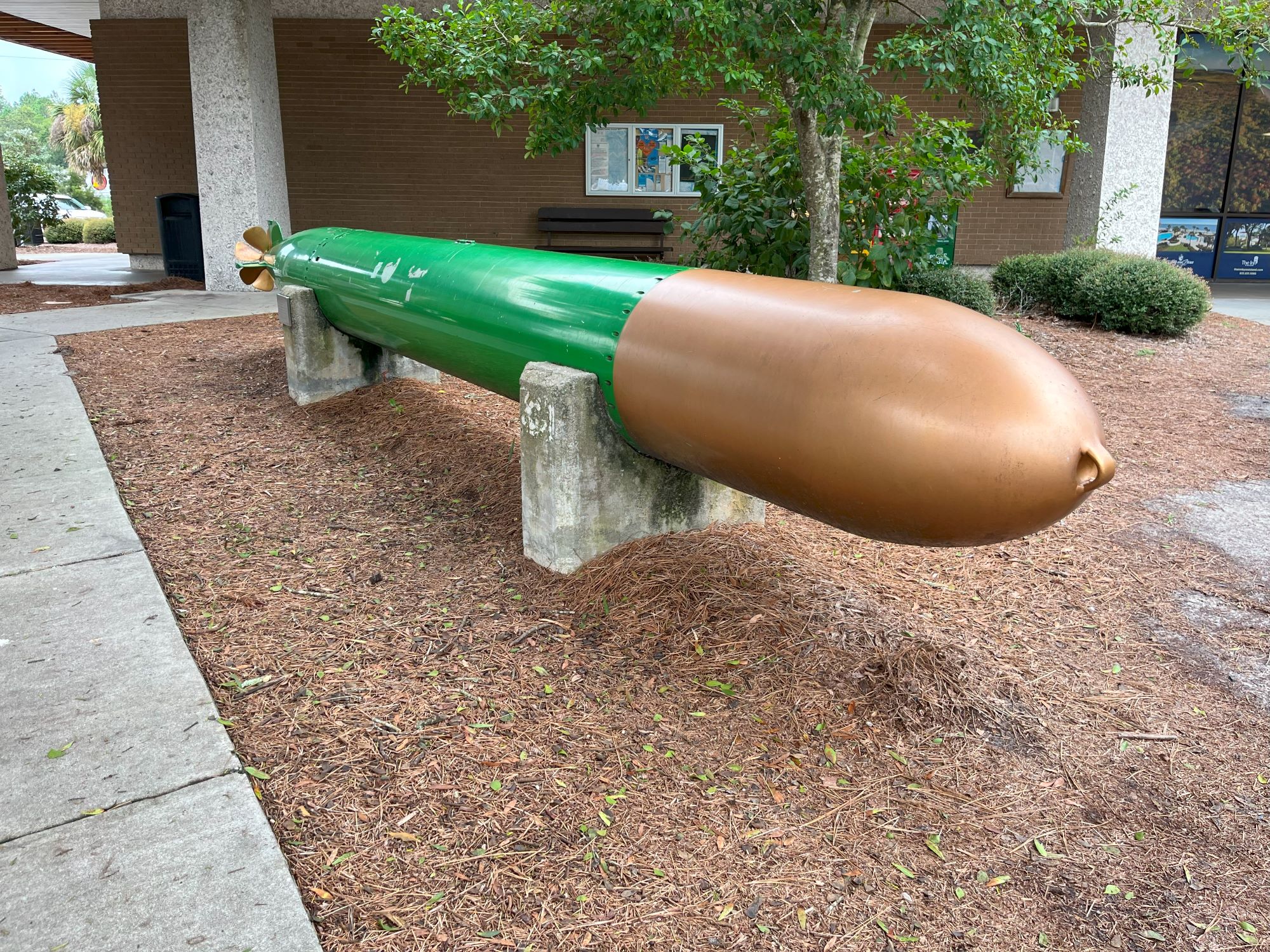
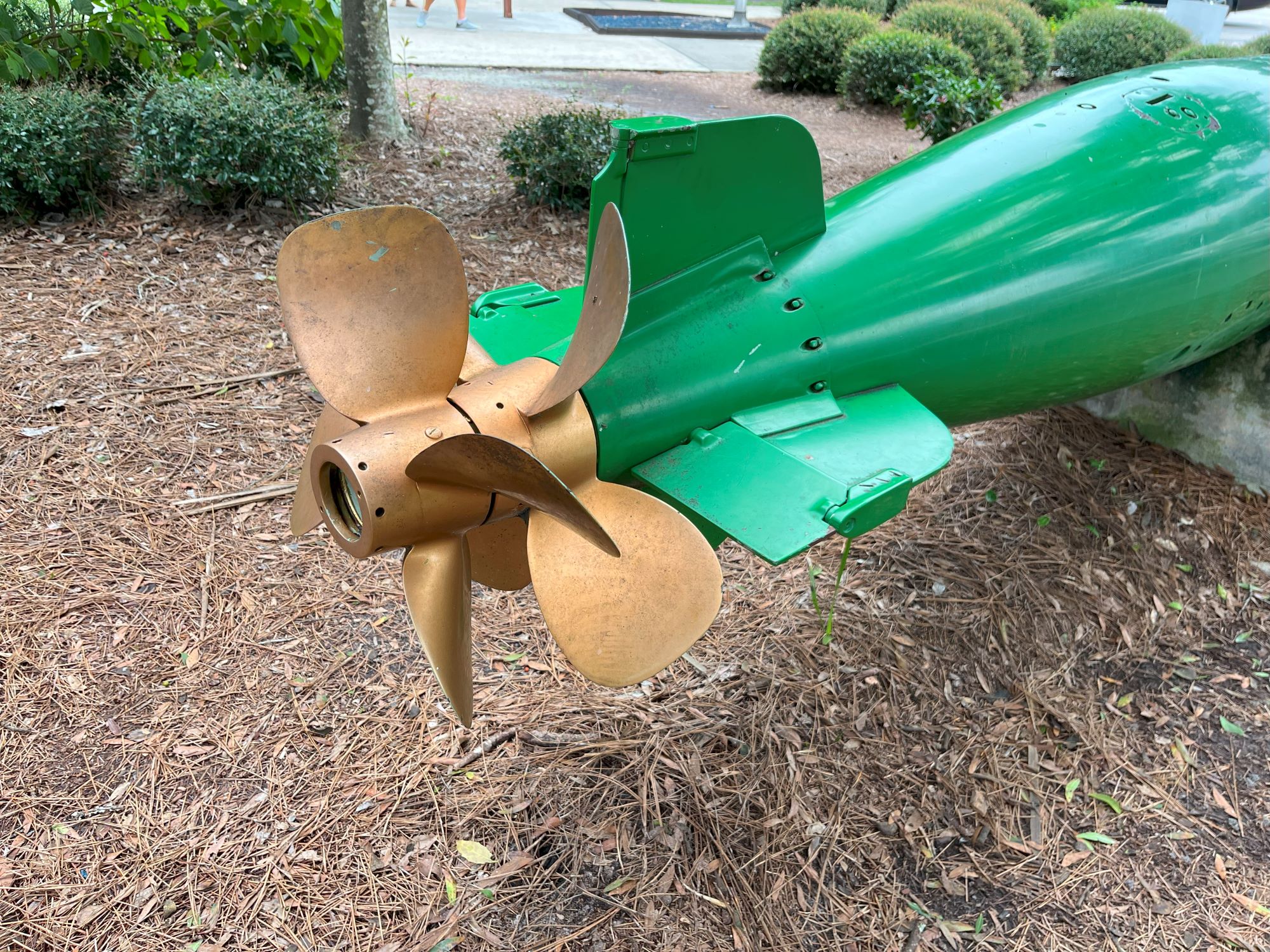
Mk 14 Torpedo on Display at a Georgia Rest Stop
World War I had proven that submarines and torpedoes were a new and critical part of a modern navy. In 1931, the United States Navy began the design of a new torpedo, dubbed the Mk 14, to replace the First World War’s Mk 10. In every parameter, the new, larger torpedo was better. At least it was better on paper.
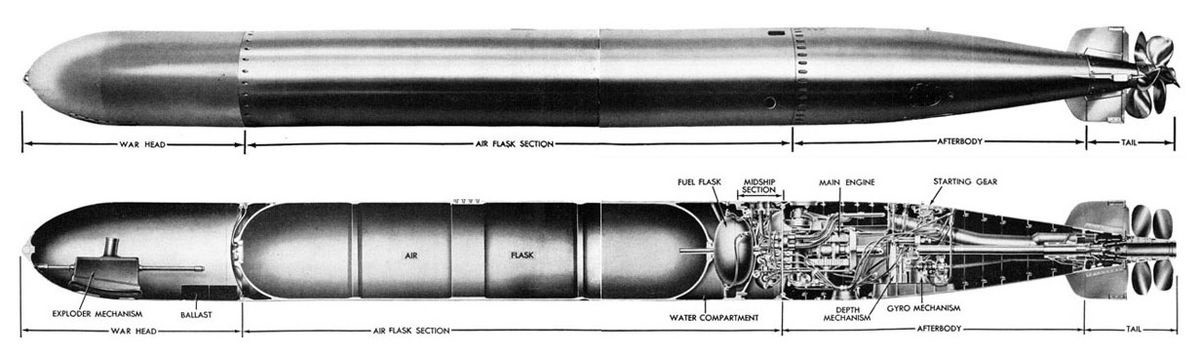
Mk 14 Torpedo Diagram
During the Great Depression, the tight-fisted Navy only did limited testing on this new torpedo. Each one cost $10,000 (almost a quarter of a million dollars in today’s money) so no one was in a hurry to spend that. It wouldn’t be until combat in 1942 that the shortcomings of the Mk14 would be discovered.
The Mark 14 torpedo had four major flaws.
- It tended to run about 11 feet deeper than setpoint.
- The magnetic exploder was unreliable.
- The alternative contact exploder frequently failed to detonate the warhead.
- Often it would not hold a straight course, sometimes circling back and striking the sub that fired it.
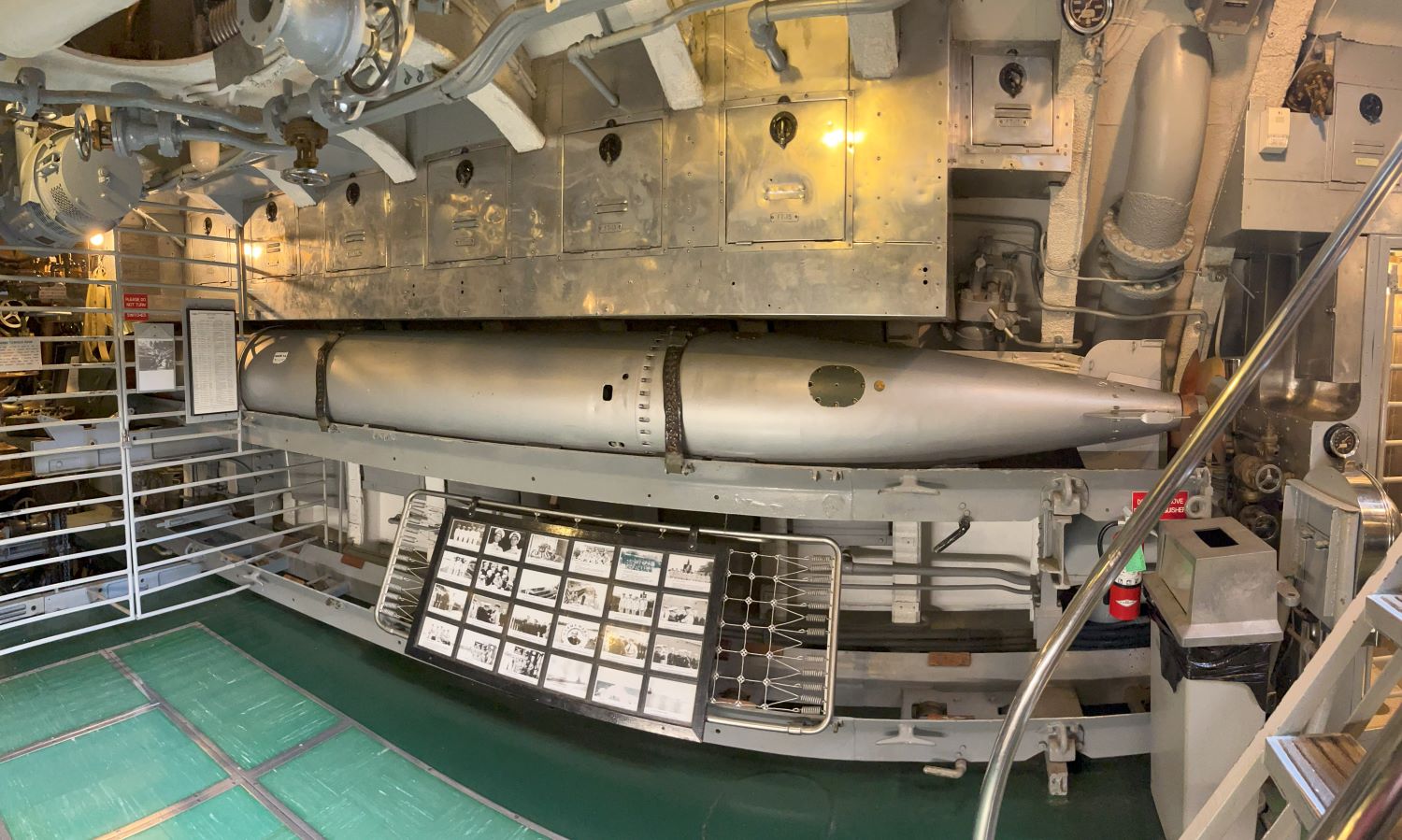
Mk 14 Torpedo in a Rack, Forward Torpedo Room, U.S.S. Drum
The Navy dismissed these claims of poor performance until overwhelming examples from wartime patrols made the deficiencies impossible to ignore. Over the course of two years, the root causes of the problems were discovered and fixed, and the magnetic exploders abandoned all together. By war’s end, the latest version of the Mk 14 became so good that it wasn’t retired until 1980.
***
The second bit of submariner tech that comes up in the story is a rebreather. In those days, scuba gear had yet to be invented, and the navies of the world wanted a way for sailors trapped on a submarine to be able to swim to safety. The American version was called a Momsen Lung, the British a Davis Submerged Escape Apparatus, and Germans a Dräger Tauchretter. All versions used basically the same technology.
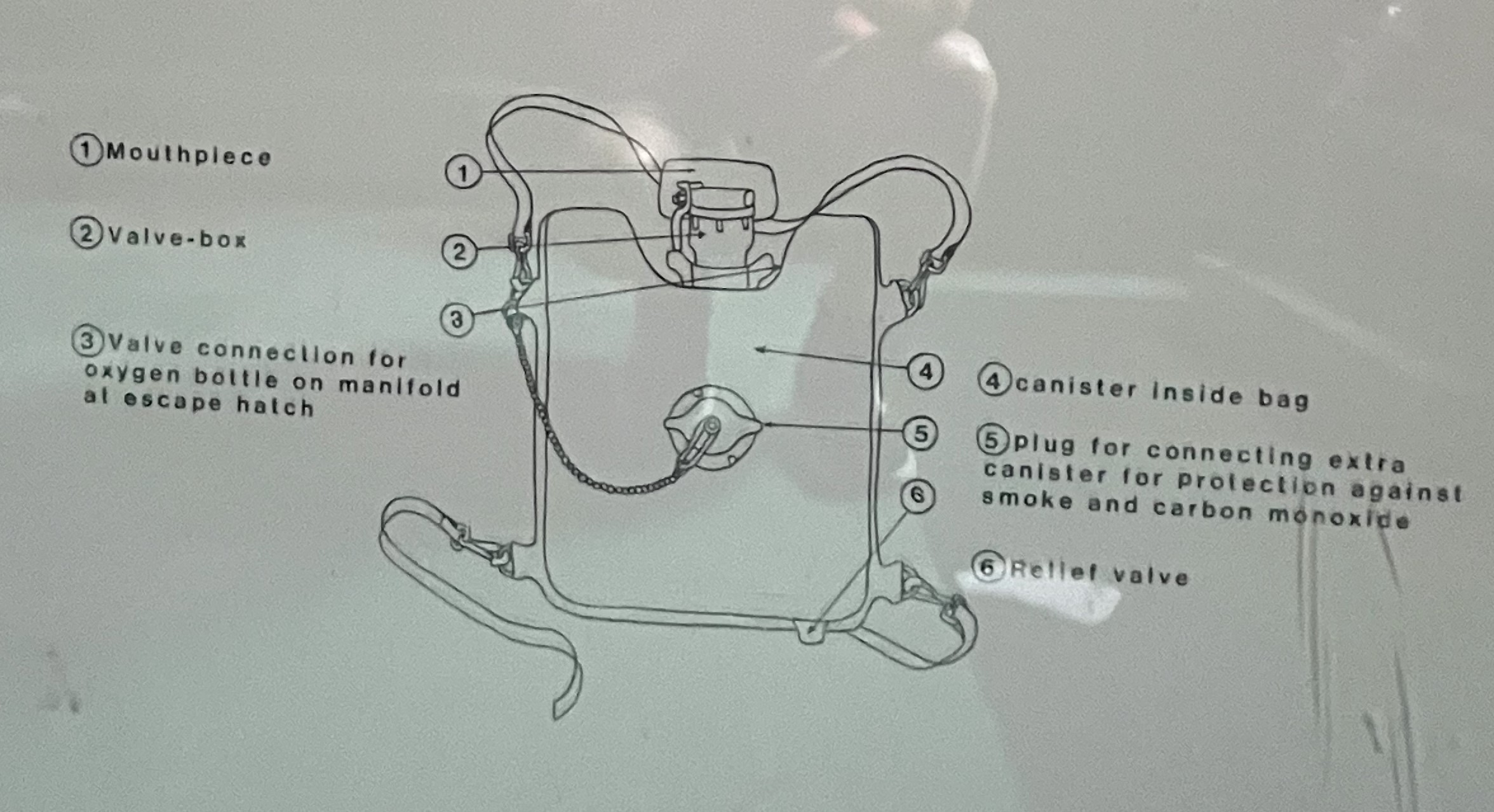
All the designs had a built in chemical filter of some type that scrubbed the CO2 out of exhaled air and sent that air into a pouch. The pouch was filled with oxygen, either from an attached canister or from the submarine before escaping. The apparatus had a hose and mouthpiece for the sailor to breathe into.
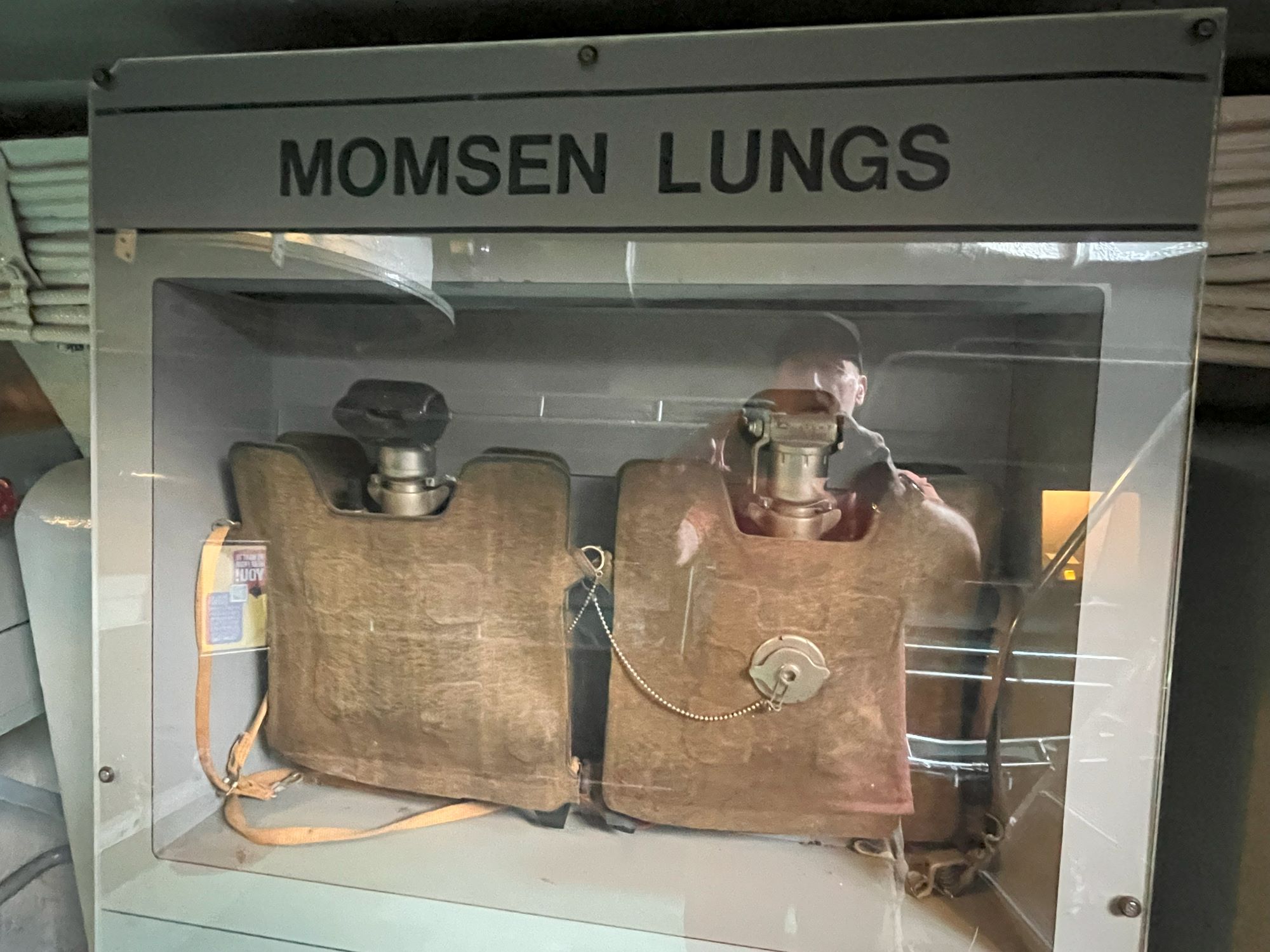
These devices had a limited usable time of about 30 minutes and required a clear head to put on and properly prepare for use. All this while aboard a sinking submarine.

There was also a limit as to how deep one could be underwater to use one. At about a hundred feet deep, a too rapid ascent would give the sailor a case of “the bends.” Nitrogen bubbles form and build up in blood and tissue. The result is a very painful death. So the sailor is also supposed to regulate his ascent, generally through very cold ocean water.
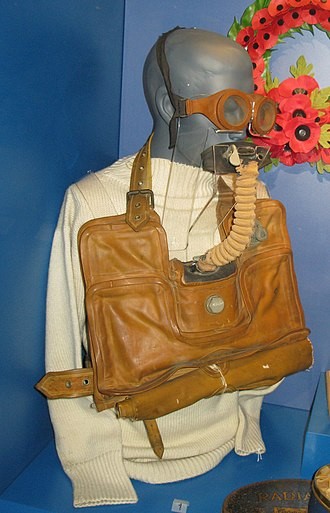
Believe it or not, these devices did save some lives. The most amazing story was what happened to Royal Navy lead stoker John Capes.
He was hitching a ride back to his base aboard the HMS Perseus when on December 6, 1941 the Perseus struck a mine and sank off some Greek islands. When the sub hit bottom the depth gauge read 270 feet.
Capes and three others made it to the engine room. But the bulkhead door wasn’t holding, so the desperate four exited through the escape hatch using Davis Submerged Escape Apparatuses.
Only Capes made it to the surface and found himself five miles off the island of Cephalonia. Amazingly, he made the swim. Locals hid him for a year and a half before eventually smuggling him to the British Embassy in Turkey.
His story was hard to believe. By hitching a ride, there was no record of him being on the sub, and swimming up from 270 feet down was impossible. The official investigation couldn’t confirm or refute his story. He spent nine more years in the Navy. When he died in 1985, many still thought he’d been lying.
But in 1997, a dive team proved that his story was true. They discovered the sub in 171 feet of water off Cephalonia. The shattered bow sat next to the anchor chain of an Italian mine. The escape hatch to the intact stern compartment was open. The depth gauge inside incorrectly read 270 feet and a makeshift bunk in the torpedo room matched Capes’ description of his own.
Don’t miss two other pages of historical bonus material for this novel here and here on my website.
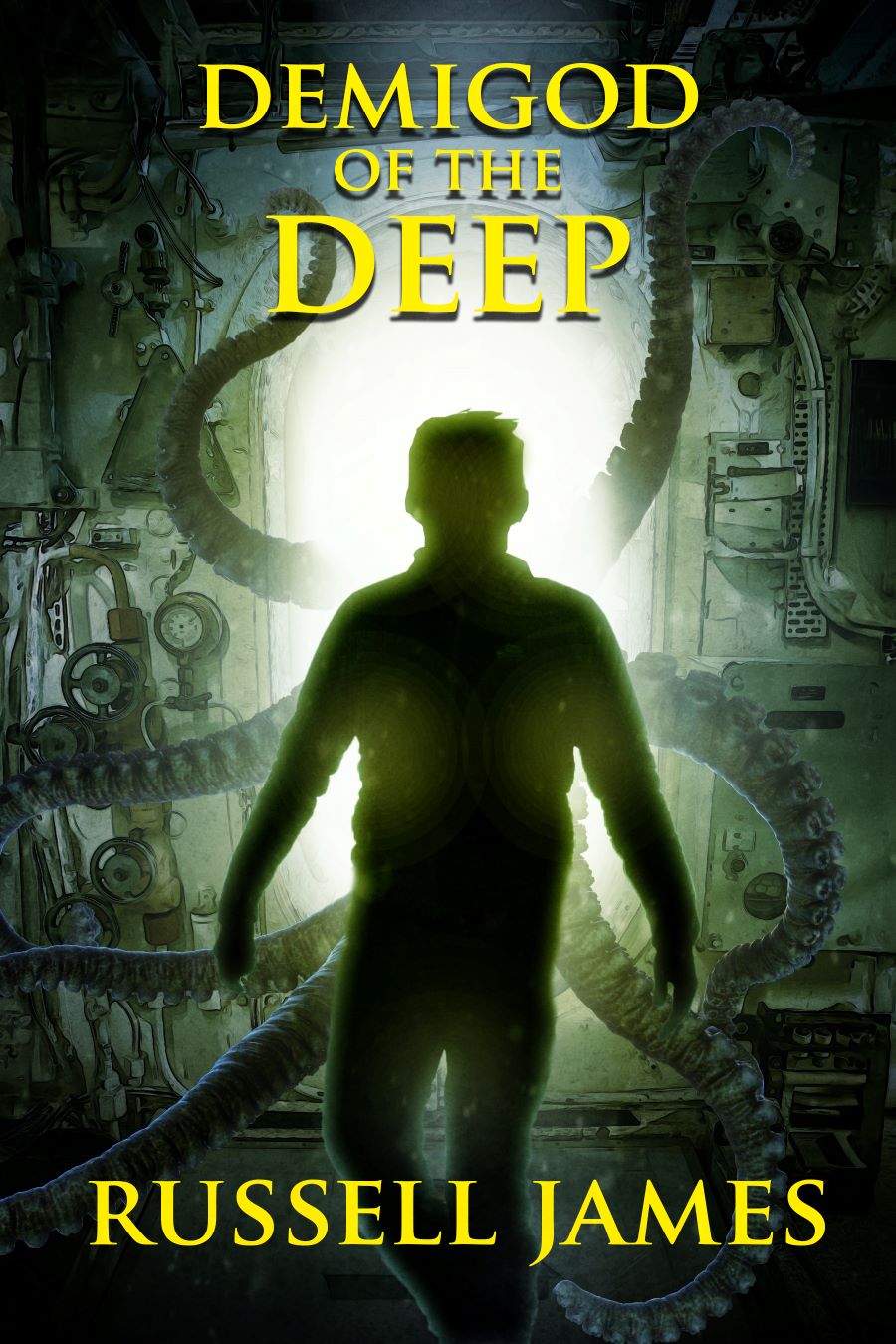
It is 1942, and a secret organization within the SS called the Ahnenerbe is working hard to harness occult powers for the war effort. Allied intelligence reports indicate that its leader, Gruppenführer Karl Weitz, and a Finnish expert have discovered a supernatural force that can fuel a new, more powerful U-boat.
Major Ray Hawkins commands the Office of Supernatural Directives, a clandestine U.S. Army unit tasked with stopping the Ahnenerbe. He recruits convicted mutineer U.S. Navy Lieutenant Caleb Kendall to infiltrate a secret German base and verify the reports.
Caleb discovers the Germans have captured the Iku-Turso, an ancient demigod of the sea, so powerful that just being exposed to it can kill a man. Once it is fueling a U-boat, the submarine would never need to surface and would become impervious to mines and depth charges.
It’s a race against time and across the sea to stop Weitz. Caleb’s only help comes from a crew of Free French submariners, an untested Army Ranger, and some unlikely civilian believers in archaic Finnish myths. The odds of success are slim, but Caleb must try. If this submarine launches with the demigod of the deep on board, it will sweep the Atlantic clear of Allied ships, and the war will be lost.
If you don’t already have your copy of Demigod of the Deep you can get it here on Amazon, or anywhere you buy your books.